
DHI commonly describes recipient placement using an implanter device after follicular units have been individually extracted.
Implanter-Assisted Hair Restoration in Istanbul
DHI Hair Transplant in Turkey
DHI hair transplantation commonly combines individual FUE-based donor extraction with recipient placement using an implanter device. At Henesis Clinic, DHI is considered according to the recipient area, existing hair, shaving preference, donor characteristics and overall treatment plan rather than as a universally superior technique.
Direct answers
DHI Hair Transplant in Turkey — Quick Answers
In many DHI workflows, donor follicles are still harvested individually using FUE-based extraction.
FUE GuideSelected 2026 examples reviewed fall around $2,600–$5,500. Henesis plans range from $3,190 to $5,450.
See DHI PricingDHI is not universally better or more effective than FUE. They describe different stages, and many DHI procedures still use FUE-based extraction.
See ComparisonCore terminology
DHI Is a Placement Workflow, Not a Different Donor-Extraction Method
Individual follicular units are removed from the donor area.
Extracted grafts are prepared and protected before placement.
Prepared grafts are placed using an implanter device.
DHI and FUE are often compared as if they describe the same procedural step. They do not.
Procedure overview
How Does a DHI Hair Transplant Work?
Once candidacy and donor planning are confirmed, a typical DHI workflow can be understood in four practical stages.
- 01
Donor Assessment
Donor capacity, recipient need, existing hair and long-term loss are assessed.
- 02
Individual Extraction
Follicular units are isolated and removed using FUE-based extraction.
- 03
Implanter Loading
Prepared grafts are loaded into an appropriately selected implanter device.
- 04
Recipient Placement
Grafts are placed according to the planned direction, distribution and depth.
At Henesis, treatment planning and recipient-site creation are performed directly by the doctor. Trained technicians perform extraction and graft placement under doctor supervision according to the confirmed clinical plan.
Placement instrument
What Is a DHI Implanter or Choi Pen?
A DHI implanter is a pen-like device used to hold and place prepared grafts into recipient sites. The term “Choi pen” is often used in hair-transplant marketing and clinical discussion for pen-style implanter devices, although different implanter systems and sizes exist.
- The prepared graft is loaded into the device
- Placement follows the planned direction and distribution
- Device size is selected around graft and recipient needs
The instrument does not determine success by itself. Candidate selection, donor planning, graft handling, placement control and the clinical team remain essential.
High-intent comparison
DHI vs FUE: What Is the Real Difference?
DHI is not universally better or more effective than FUE. FUE primarily describes donor extraction; DHI describes an implanter-assisted recipient workflow. Many DHI procedures still use FUE-based extraction.
| Comparison | FUE | DHI |
|---|---|---|
| Primarily describes | Donor extraction | Recipient placement |
| Donor harvesting | Individual extraction | Usually individual FUE-based extraction |
| Recipient stage | Not defined by FUE itself | Implanter-assisted placement |
| Existing hair | Depends on recipient workflow | May suit selected existing-hair contexts |
| Shaving | Case-specific | Selected limited-shave workflows may be possible |
| Large / high-graft areas | Depends on the recipient workflow used after extraction | May be less practical in some extensive or high-graft cases |
| Scarring | Small scattered donor marks after extraction | Not scarless when FUE-based extraction is used |
| Recovery | Depends on extraction, placement and the individual case | Does not guarantee faster recovery than FUE |
| Which is better | Not universally better or worse | Not universally better or more effective |
| Selection | Case-specific | Case-specific |
Recipient workflow comparison
DHI vs Sapphire FUE: What Changes?
Implanter-Assisted Placement
Prepared grafts are placed with an implanter device as part of the recipient workflow.
Sapphire Channel Creation
Individual FUE extraction is followed by recipient channels created with a sapphire blade and subsequent graft placement.
Patient-decision context
What Are the Advantages and Limitations of DHI?
These are planning considerations, not guaranteed advantages. Whether DHI is useful depends on the recipient area, existing hair, graft demand and the overall treatment plan.
Potential Practical Advantages
- Controlled implanter-assisted recipient placement
- Selected placement among existing hair
- Selected limited-shave workflows
- Case-specific recipient planning
Limitations
- DHI does not create additional donor capacity
- DHI is not universally superior to FUE
- Extensive treatment areas or high graft requirements may make the workflow less practical in some cases
- DHI is not scarless when FUE-based extraction is used
- The implanter itself does not determine the outcome
- Planning, graft handling and clinical execution remain essential
Unshaven and long-hair intent
Can DHI Be Performed Without Shaving the Entire Head?
In selected patients, yes. DHI may be planned with partial or limited shaving because recipient placement can be performed among existing hair. This does not mean every patient is suitable for a fully unshaven procedure.
May Be Useful When
- Treatment is localized around the hairline
- A selected female case is clinically suitable
- Preserving the appearance of existing hair is important
- The patient accepts practical graft and session constraints
May Not Be Suitable When
- The treatment area is large
- Donor access is complex
- A high graft requirement is planned
- Visibility or access could limit safe execution
Limited-shave and fully unshaven approaches are not the same, and feasibility depends on both donor access and recipient-area requirements.
Explore the Unshaven Hair Transplant GuideExisting-hair planning
When Can DHI Be Useful Around Existing Hair?
Implanter-assisted placement can be considered where grafts need to be distributed among existing hairs. This does not make DHI automatically safer or better, and surrounding follicles still require careful planning.
Selected female cases may also benefit from recipient planning around existing hair, but diffuse thinning still requires diagnosis and donor assessment.
Explore Female Hair Transplant GuidanceSuitability before technique
Who May Be Suitable for DHI?
DHI May Be Considered When
- Donor supply is adequate
- Recipient needs are localized or defined
- Existing-hair context supports controlled placement
- The treatment area is practically accessible
- Goals are realistic and long-term
Further Assessment Is Important When
- Diffuse loss is unstable or undiagnosed
- Donor supply is limited
- Active scalp disease is present
- Graft demand is extensive
- Previous surgery has depleted the donor area
Henesis planning principle
DHI Still Starts With the Donor Area
The implanter does not create donor capacity. In a typical DHI workflow, donor follicles are still extracted individually, so donor assessment, extraction distribution and long-term preservation remain essential.
- Assess finite donor capacity
- Avoid concentrated overharvesting
- Plan extraction distribution
- Preserve options for future loss
DHI Hair Transplant Before & After Results
Explore documented DHI cases with verified treatment details and follow-up information. Results vary between patients.
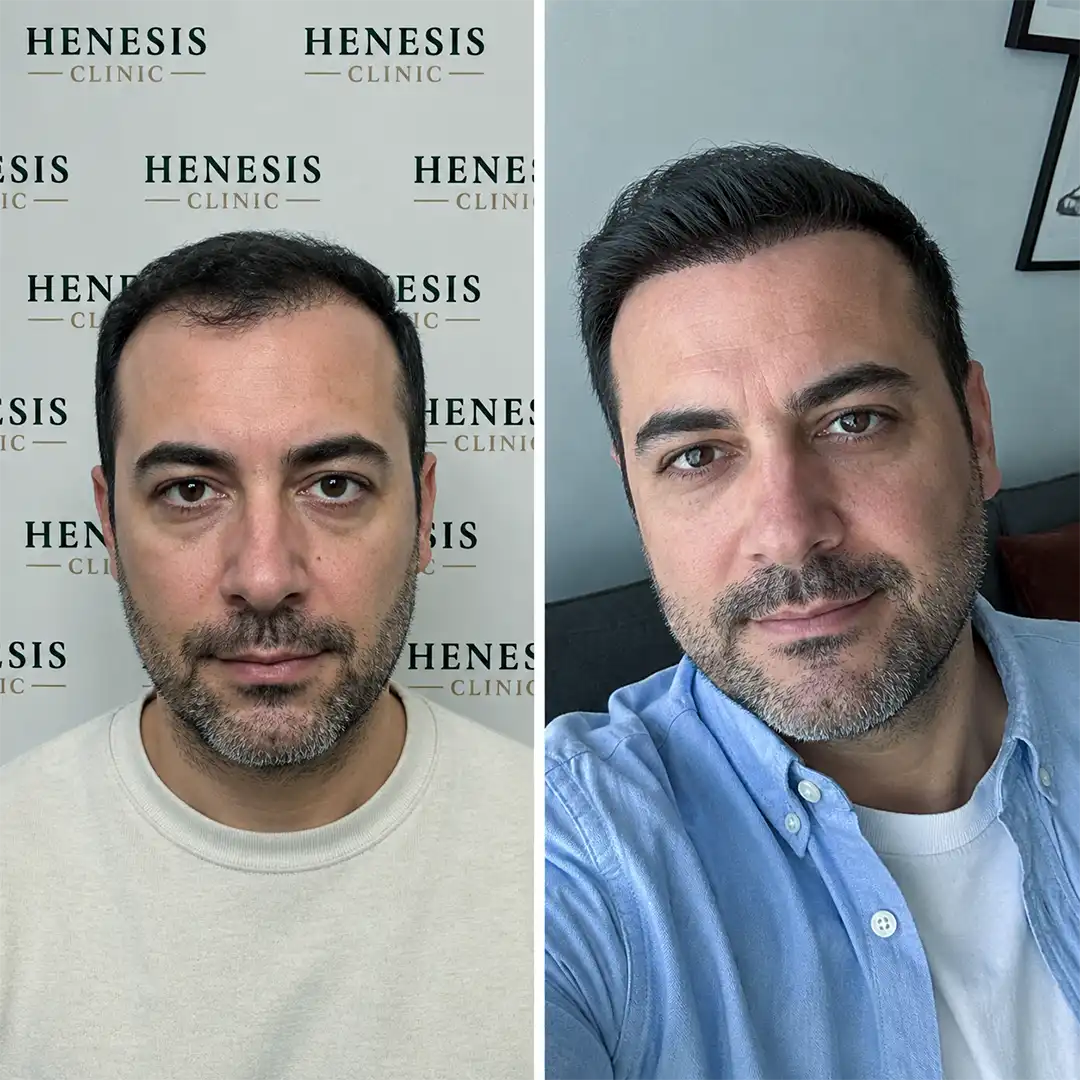 Before
After
Before
After
DHI Hair Transplant
DHI Hair Transplant — 3,250 Grafts
- Technique
- DHI
- Graft Count
- 3,250 grafts
- Treatment Area
- Frontal Hairline, Bitemporal Recessions And Anterior Mid-Scalp
- Follow-Up
- 12-Month Follow-Up
Doctor: Dr. Nora Derin, MD
View Clinical Case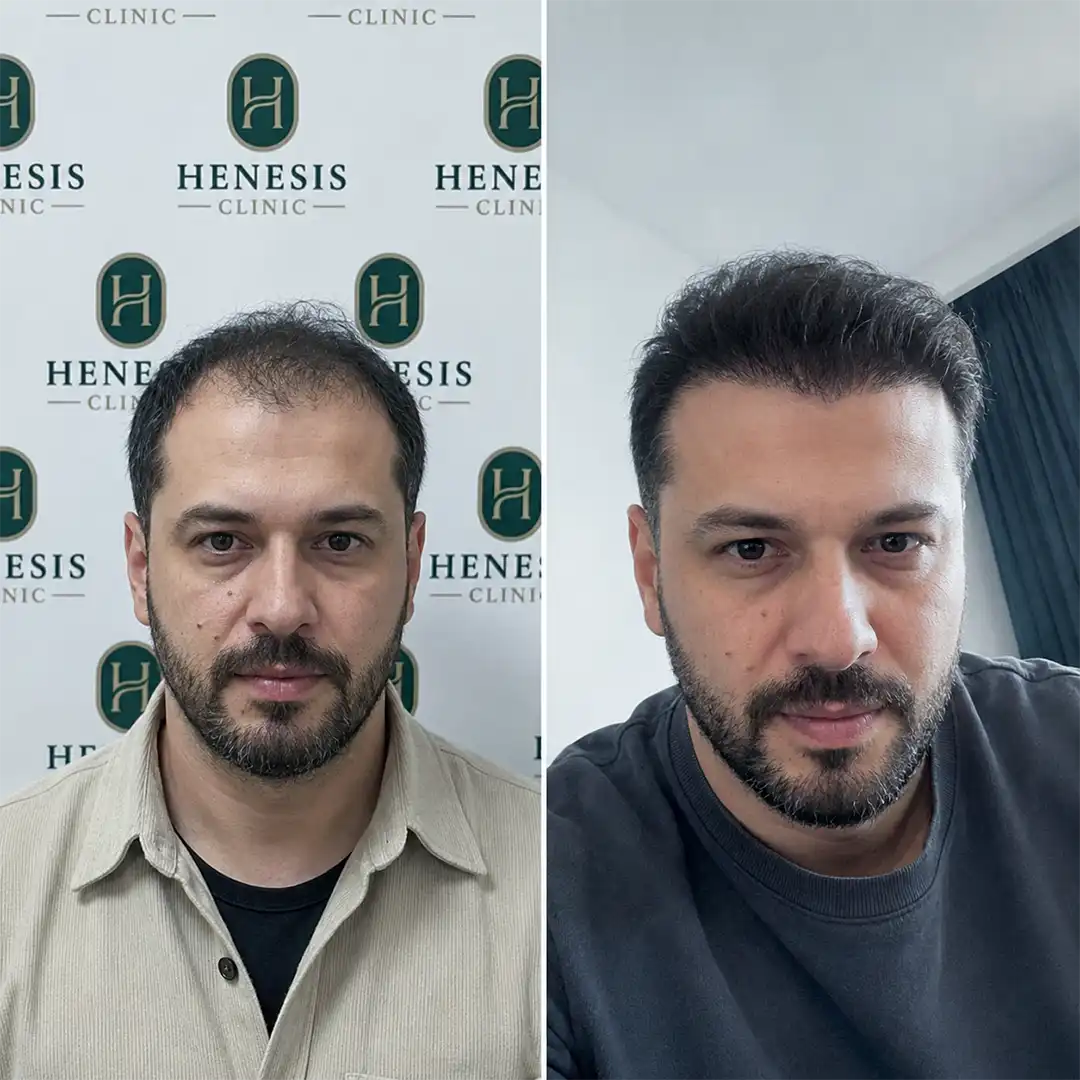 Before
After
Before
After
DHI Hair Transplant
DHI Hair Transplant — 3,300 Grafts
- Technique
- DHI
- Graft Count
- 3,300 grafts
- Treatment Area
- Frontal Hairline, Bitemporal Recessions And Anterior Mid-Scalp
- Follow-Up
- 12-Month Follow-Up
Doctor: Dr. Timur Aksu, MD
View Clinical Case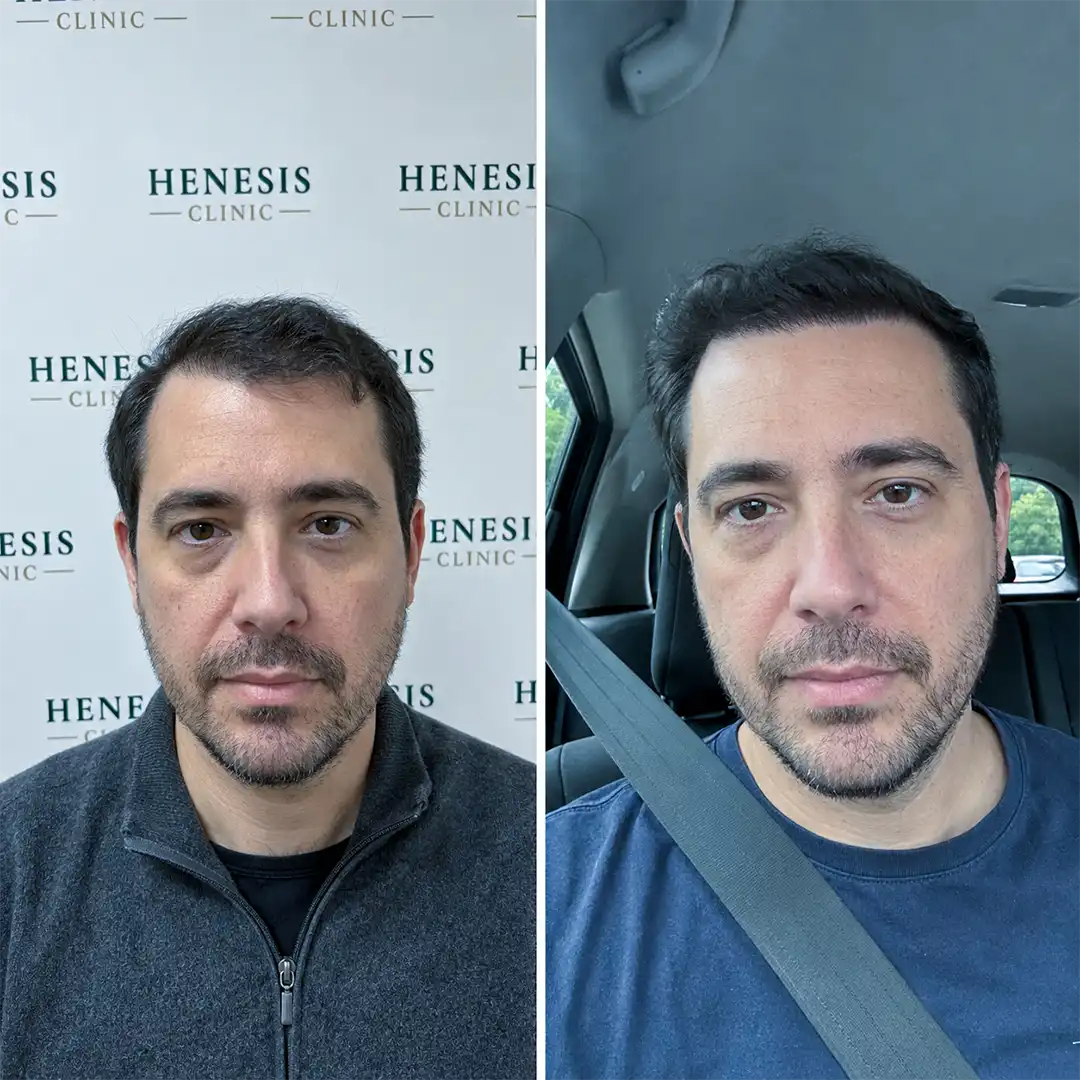 Before
After
Before
After
DHI Hair Transplant
DHI Hair Transplant — 3,150 Grafts
- Technique
- DHI
- Graft Count
- 3,150 grafts
- Treatment Area
- Frontal Hairline, Bitemporal Recessions And Anterior Mid-Scalp
- Follow-Up
- 12-Month Follow-Up
Doctor: Dr. Nora Derin, MD
View Clinical Case2026 pricing context
DHI Hair Transplant Cost in Turkey
Selected publicly advertised 2026 DHI examples reviewed for the Henesis Cost Guide generally fall around $2,600–$5,500. Henesis treatment plans currently range from $3,190 to $5,450, with final scope following individual assessment.
See Full 2026 Cost Methodology- Selected DHI context
- $2,600–$5,500
- Henesis plans
- $3,190–$5,450
- Pricing model
- Case-specific assessment
Session planning—not a fixed maximum
How Many Grafts Can Be Placed With DHI?
There is no universal DHI graft maximum. Practical session planning depends on donor capacity, treatment area, staff workflow, graft handling, recipient access and clinical priorities.
A high advertised graft ceiling does not establish suitability or care quality. The appropriate plan begins with safe donor capacity and realistic recipient demand.
Compact recovery overview
DHI Recovery: What Should Patients Expect?
- First days
Redness, swelling, scabbing and tenderness can occur.
- First weeks
Transplanted hairs may shed during the early phase.
- Following months
New growth develops progressively rather than immediately.
- Longer term
Visual maturation continues according to the individual case.
Direct answer
Does DHI Leave Scars?
DHI is not scarless. DHI recipient placement does not remove the donor extraction sites created during harvesting. If donor follicles are harvested with FUE, small scattered donor marks can still remain.
Visibility depends on extraction pattern, punch size, healing, skin characteristics and hair length. Recipient healing also varies between patients.
Workflow-specific limits
DHI Risks and Limitations
The implanter is a tool, not a safeguard against poor planning or execution.
Graft Loading or Handling Damage
Prepared follicles can be damaged if loading or handling is poorly controlled.
Placement Trauma
Poorly controlled insertion can increase unnecessary tissue trauma.
Excessive Density or Tissue Stress
Attempting excessive recipient density may compromise practical placement and tissue handling.
Donor Overharvesting
DHI does not remove the donor limitations created during FUE-based extraction.
Existing-Hair Trauma
Placement among native hair requires careful planning to reduce avoidable trauma.
Team Workflow Dependence
Implanter-assisted placement still depends on the coordination and experience of the clinical team.
General surgical risks, post-procedure healing and long-term native hair loss are covered in our Medical Standards and Aftercare guidance.
Country context
Why Do Patients Choose Turkey for DHI?
Turkey combines lower advertised price ranges, many providers offering implanter-assisted workflows, international-patient infrastructure and accessible travel through Istanbul.
Price differences versus markets such as the US and UK
Concentration of clinics offering DHI workflows
International consultation and travel support
Frequent international flight connections
The DHI label alone does not establish clinic quality. Clinical responsibility, donor planning, documented results and realistic claims remain more useful comparison points.
Best-clinic decision support
How to Compare DHI Clinics in Turkey
Placement Responsibility
Who plans and performs or supervises recipient placement?
Graft Loading
Who loads grafts and how is handling quality controlled?
Donor Extraction
Who owns extraction planning and donor preservation?
Documented DHI Cases
Are comparable cases supported by clinical context?
No-Shave Claims
Are suitability and practical limits explained realistically?
Written Scope
Are costs, responsibilities and follow-up defined before travel?
Medical references
Sources Supporting Key Clinical Information
Selected non-commercial sources support the implanter, extraction, graft-handling, scarring and risk information on this page.
- Use of Implanters in Premade Recipient Sites for Hair TransplantationPMC · Clinical study
- Direct Hair Transplantation: A Modified Follicular Unit Extraction TechniquePMC · Technique report
- Hair TransplantationNCBI Bookshelf · StatPearls
Medical content reviewed by Dr. Nora Derin, MDSenior Hair Restoration Physician · Published 23 August 2026 · Last reviewed 23 August 2026
DHI Hair Transplant FAQs
Answer-first guidance on DHI placement, FUE extraction, implanter devices, costs, shaving, recovery, scars and candidacy.
What is DHI hair transplant?
DHI commonly describes placement of prepared follicular units into the recipient area using an implanter device. It often follows individual FUE-based donor extraction.
Does DHI use FUE?
Many DHI workflows use FUE-based extraction to harvest individual follicular units before implanter-assisted recipient placement.
What is a Choi pen?
The term “Choi pen” is often used in hair-transplant marketing and clinical discussion for pen-style implanter devices that hold and place prepared grafts, although different systems and sizes exist.
Is DHI better than FUE?
DHI is not universally better or more effective than FUE. FUE primarily describes donor extraction; DHI describes implanter-assisted recipient placement. Many DHI procedures use FUE-based extraction first.
What are the disadvantages of DHI?
DHI does not create extra donor capacity and is not universally superior to FUE. Extensive treatment areas or high graft demand can make the workflow less practical, and FUE-based extraction still leaves donor marks. The implanter itself does not determine the outcome.
What is the difference between DHI and Sapphire FUE?
DHI uses an implanter device for recipient placement. Sapphire FUE usually describes FUE extraction followed by recipient channels created with a sapphire blade and subsequent graft placement.
How much does DHI cost in Turkey?
Selected publicly advertised 2026 DHI examples reviewed for the Henesis Cost Guide generally fall around $2,600–$5,500. Henesis plans range from $3,190 to $5,450 after assessment.
Can DHI be done without shaving?
Partial or limited-shave DHI may be possible for selected patients. Large treatment areas, donor access and high graft demand can make an unshaven workflow impractical.
Is DHI suitable for women?
It may be considered for selected women, particularly where placement around existing hair is relevant. Diagnosis, donor stability and the pattern of thinning must be assessed first.
Does DHI leave scars?
DHI is not scarless. If FUE-based donor extraction is used, many small extraction sites can heal as tiny scattered donor marks.
Is DHI more painful than FUE?
Not necessarily. Both commonly involve local anaesthesia, and discomfort varies between patients. Donor extraction and the recipient workflow both matter; DHI should not be marketed as automatically less painful.
How many grafts can DHI implant?
There is no universal safe maximum. Donor capacity, treatment area, recipient access, graft handling and team workflow determine practical session planning.
How long is DHI recovery?
Visible early healing occurs over days and weeks. Shedding may follow, while new growth and maturation develop gradually over subsequent months.
Is DHI permanent?
Transplanted follicles from a suitable donor area are generally expected to retain donor characteristics long term, but surrounding native hair can continue thinning.
When are DHI results visible?
New growth develops progressively over the months after transplantation. Many results are reviewed around 12 months, while maturation can continue longer depending on the treated area and individual healing.
Who may not be suitable for DHI?
People with insufficient donor supply, active scalp disease, unstable diffuse loss, extensive graft demand, significant donor depletion or unrealistic expectations may not be suitable without further assessment.
