
FUE extracts individual follicular units from the donor area rather than a strip of scalp. The later recipient workflow is planned separately.
FUE-Based Hair Restoration in Istanbul
FUE Hair Transplant in Turkey
An FUE hair transplant in Turkey extracts individual follicular units from the donor area rather than a strip of scalp. At Henesis Clinic, donor planning comes first; Sapphire FUE may then be used as a recipient-site workflow when it fits the case—it is not a different extraction method.
Direct answers
FUE Hair Transplant in Turkey — Quick Answers
Sapphire FUE is FUE extraction plus recipient sites created with a sapphire blade. It is not a different donor-extraction method.
Selected publicly advertised 2026 FUE prices reviewed for the Henesis Cost Guide are approximately $2,000–$4,000. Henesis plans range from $3,190 to $5,450 after individual assessment.
See FUE PricingVisible early FUE healing usually occurs over the first days and weeks. New growth develops gradually over subsequent months.
Aftercare GuideMethod versus workflow
FUE, Sapphire FUE and DHI Are Not Three Versions of the Same Thing
The labels describe different parts of hair transplantation. They should not be treated as interchangeable package names.
Donor side
FUE extractionIndividual follicular units removed
Recipient side
FUE
Primarily describes the follicular extraction concept.
Sapphire FUE
FUE extraction with a sapphire blade used during recipient-site creation.
DHI
Commonly describes placement using an implanter workflow after individual extraction.
The labels describe different parts of the procedure. Technique selection should follow the treatment plan rather than the package name.
The extraction method
How Does an FUE Hair Transplant Work?
FUE begins with the donor area and continues through recipient planning and graft placement.
- 01
Donor Assessment
Donor density, distribution, hair characteristics and future demand are evaluated.
- 02
Follicular-Unit Extraction
Individual follicular units are isolated and removed using a case-specific extraction approach.
- 03
Recipient-Site Planning
Hairline, direction, angle, treatment zones and distribution are planned before placement.
- 04
Graft Placement
Prepared grafts are placed according to the recipient workflow defined for the case.
FUE describes how follicles are harvested. It does not, by itself, define every later stage of transplantation.
Recipient-site refinement
What Makes Sapphire FUE Different?
In a Sapphire FUE hair transplant, the extraction step remains FUE. The distinction is the sapphire blade used during recipient-site creation, not a different harvesting method.
What Sapphire Changes
- Blade material
- Recipient-site creation workflow
- The instrument used during recipient-site creation
What Sapphire Does Not Determine by Itself
- Donor quality or viable graft number
- Graft handling
- Hairline design or physician skill
- Long-term hair loss
- The final cosmetic result
Featured answer
Is Sapphire FUE Better Than Standard FUE?
Not automatically. Sapphire blades change the recipient-channel creation instrument, but a successful result still depends on candidate selection, donor management, graft handling, recipient planning, placement and clinical execution.
| Comparison | Standard FUE workflow | Sapphire FUE workflow |
|---|---|---|
| Donor extraction | FUE | FUE |
| Recipient tool | Conventional blade | Sapphire blade |
| Hairline planning | Case-specific | Case-specific |
| Graft handling | Case-specific | Case-specific |
| Best choice | Depends on the case | Depends on the case |
Henesis does not claim that sapphire blades guarantee faster healing, higher graft survival or greater density.
Candidate selection
Who May Be Suitable for FUE Hair Transplantation?
May Be Considered
- Suitable donor supply
- A transplantable hair-loss pattern
- Realistic restoration goals
- A medically suitable scalp
- Stable planning priorities
Requires Further Assessment
- Weak or limited donor supply
- Diffuse or unstable hair loss
- Active scalp disease
- Previous donor depletion
- Unrealistic density or graft expectations
Suitability is determined by the donor area and clinical pattern—not simply by choosing FUE online.
Henesis planning principle
FUE Starts With the Donor Area, Not the Graft Target
The donor supply is finite. Extraction distribution, future hair loss and the ability to preserve options for later treatment matter more than selling the largest graft number.
- Assess total donor capacity
- Distribute extraction rather than over-concentrating it
- Plan for possible future loss
- Preserve repair and second-procedure options
Case-specific extraction variables
What Changes the FUE Extraction Approach?
A micro-punch is used to isolate individual follicular units, but there is no universal punch size or extraction angle. The approach changes according to follicular-unit size, hair calibre, skin characteristics, follicle direction, previous surgery and extraction distribution.
FUE can also be used to harvest selected non-scalp donor areas when clinically appropriate. Body Hair Transplant
- Follicular-unit size
- Hair calibre
- Skin characteristics
- Follicle direction
- Previous surgery
- Extraction distribution
Curved follicle trajectories may require additional extraction considerations.
Explore Afro Hair TransplantSemantic comparison
FUE vs DHI — Quick Comparison
FUE and DHI do not describe the same procedural stage. FUE is the donor-extraction method; DHI is a recipient-placement workflow after extraction.
| Comparison | FUE | DHI |
|---|---|---|
| Primarily describes | Donor extraction | Recipient placement workflow |
| Donor harvesting | Individual FUE extraction | Usually individual FUE extraction |
| Selection | Case-specific | Case-specific |
FUE Hair Transplant Before & After Results
Explore documented FUE hair transplant before and after cases with verified treatment details and follow-up information. Results vary between patients.
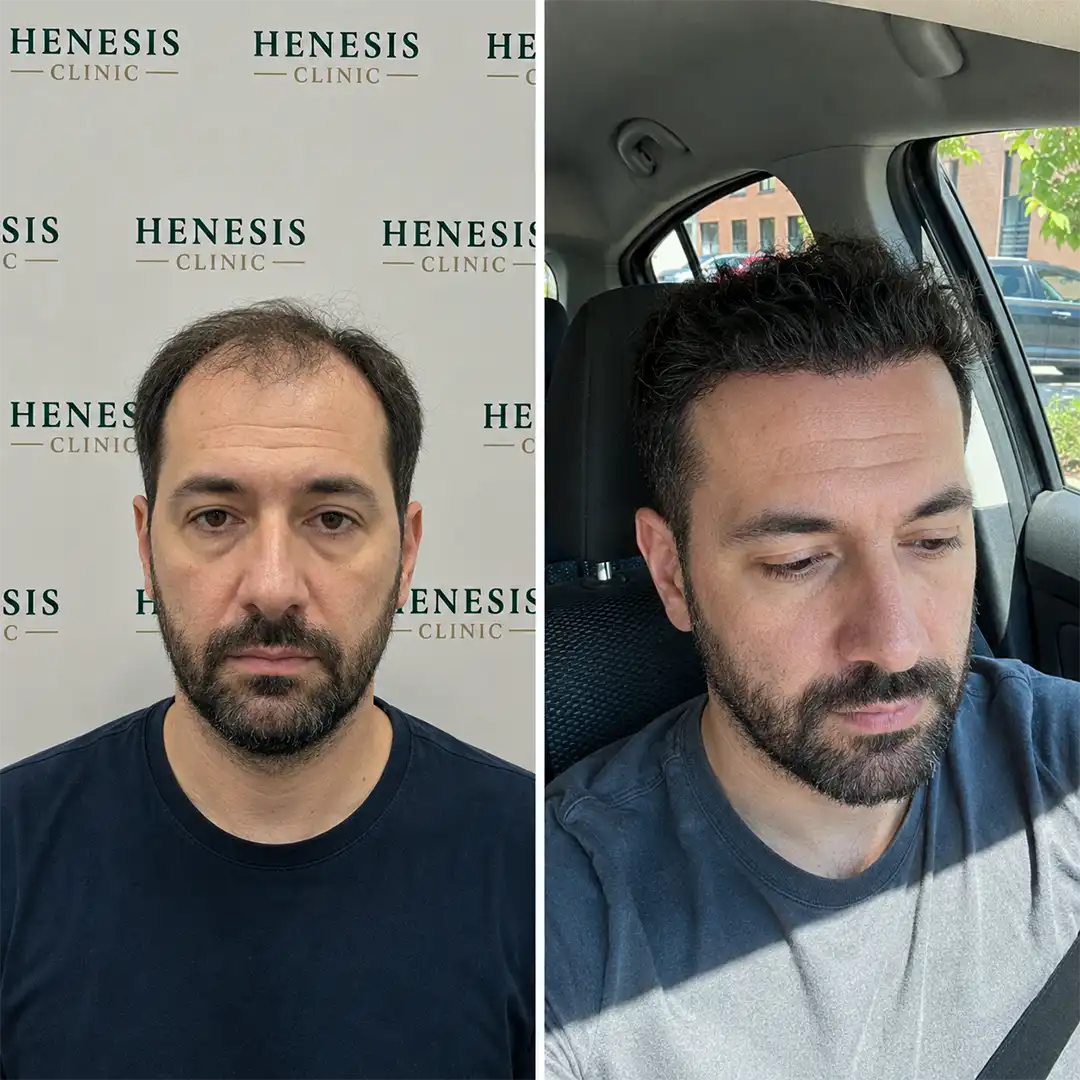 Before
After
Before
After
Sapphire FUE Hair Transplant
Sapphire FUE Hair Transplant — 4,450 Grafts
- Technique
- Sapphire FUE
- Graft Count
- 4,450 grafts
- Treatment Area
- Frontal Hairline, Bitemporal Recessions, Anterior Mid-Scalp And Crown
- Follow-Up
- 12-Month Follow-Up
Doctor: Dr. Timur Aksu, MD
View Clinical Case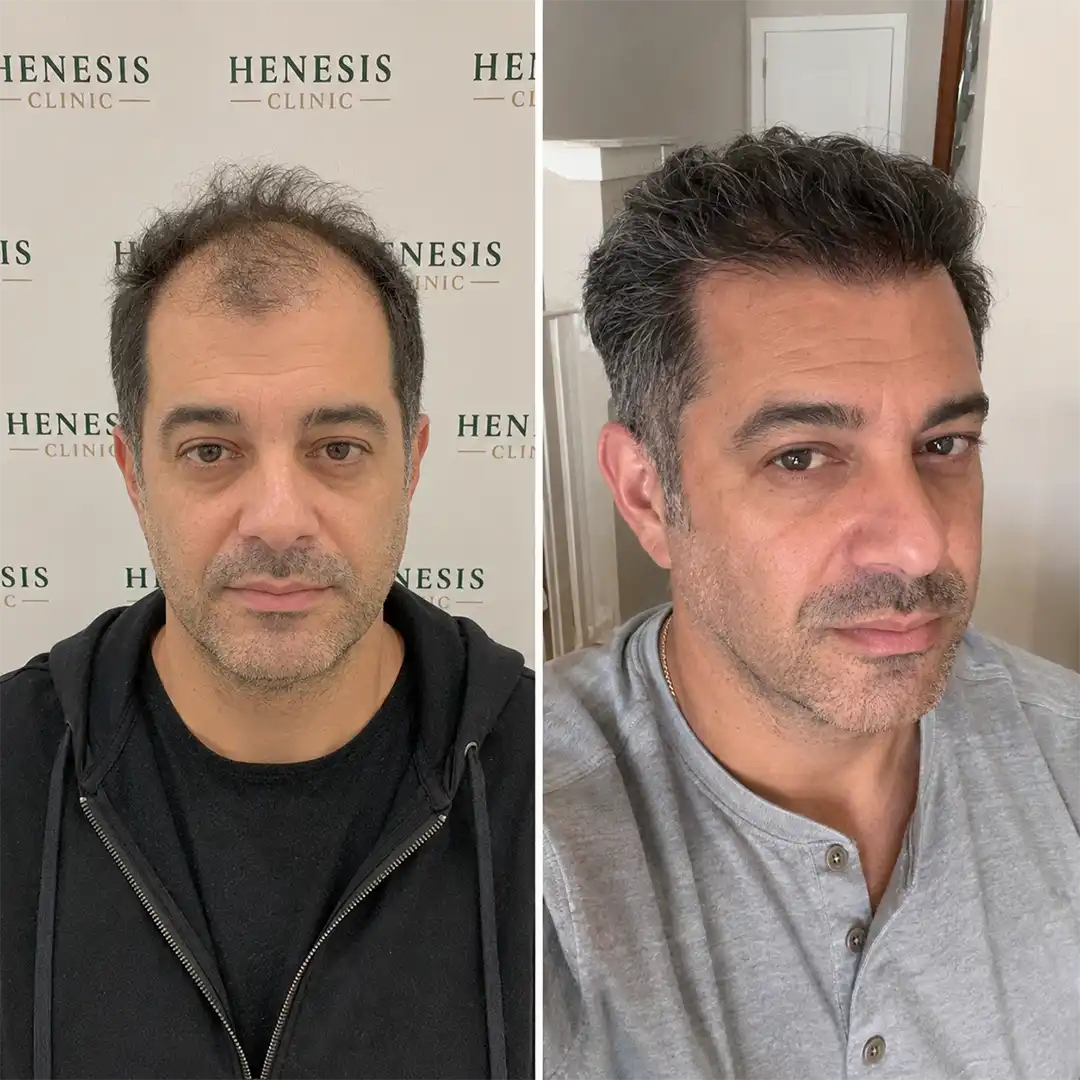 Before
After
Before
After
Sapphire FUE Hair Transplant
Sapphire FUE Hair Transplant — 3,600 Grafts
- Technique
- Sapphire FUE
- Graft Count
- 3,600 grafts
- Treatment Area
- Frontal Hairline, Bitemporal Recessions And Anterior Mid-Scalp
- Follow-Up
- 12-Month Follow-Up
Doctor: Dr. Nora Derin, MD
View Clinical Case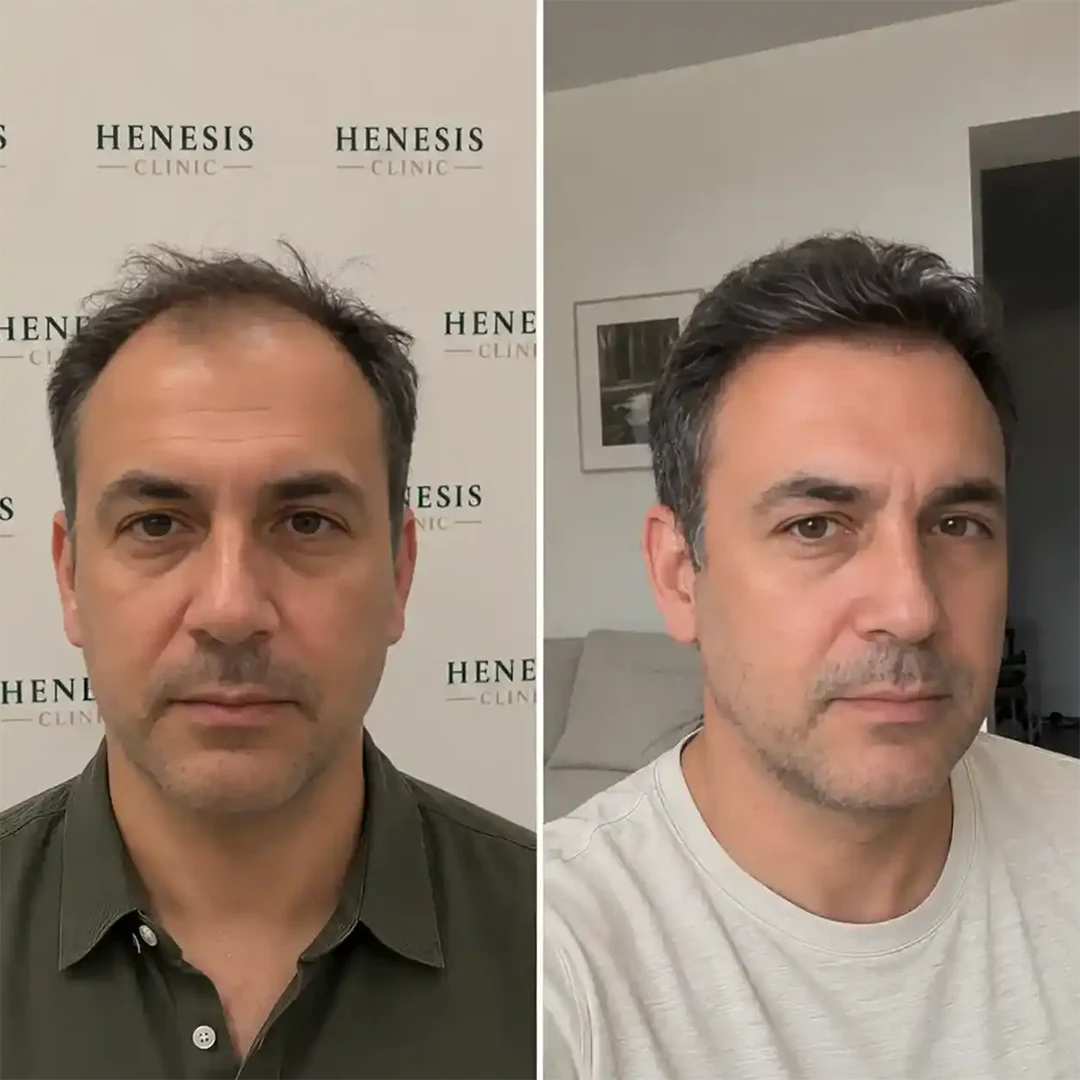 Before
After
Before
After
Sapphire FUE Hair Transplant
Sapphire FUE Hair Transplant — 4,000 Grafts
- Technique
- Sapphire FUE
- Graft Count
- 4,000 grafts
- Treatment Area
- Frontal Hairline, Bitemporal Recessions And Anterior Mid-Scalp
- Follow-Up
- 12-Month Follow-Up
Doctor: Dr. Timur Aksu, MD
View Clinical Case2026 pricing context
FUE Hair Transplant Cost in Turkey
Selected publicly advertised 2026 FUE prices reviewed for the Henesis Cost Guide are approximately $2,000–$4,000. Henesis plans range from $3,190 to $5,450 after individual assessment.
See Full 2026 Cost Methodology- Selected FUE context
- $2,000–$4,000
- Henesis plans
- $3,190–$5,450
- Pricing model
- Case-specific assessment
Illustrative planning—not a calculator
How Many Grafts Might Be Needed for FUE?
These ranges illustrate treatment scope only. Donor capacity, hair characteristics and long-term demand determine what is appropriate.
Hairline / Localized Area
Larger Frontal Restoration
Front + Mid-Scalp
Large Multi-Zone Case
Henesis does not quote treatment by multiplying a graft target by a fixed unit price.
See Graft Planning and Cost MethodologyCompact recovery overview
FUE Recovery: What Should Patients Expect?
- First days
Healing, scabbing, redness and swelling can occur.
- First weeks
Transplanted hairs may shed during the early phase.
- Following months
New growth develops progressively rather than immediately.
- Longer term
Visual maturation continues according to the individual case.
Direct answer
Does FUE Leave Scars?
FUE is not scarless. It does not create the linear donor scar associated with strip harvesting, but it does create many small extraction sites that heal as tiny scattered marks.
Their visibility depends on punch size, extraction pattern, healing, skin characteristics and hair length. Overharvesting or concentrated extraction can make donor changes more visible.
Technique-specific limits
FUE Risks and Limitations
Individual assessment and procedural planning reduce avoidable risk but cannot guarantee a particular outcome.
Follicle Transection
Follicles can be damaged during isolation if the extraction path does not follow their trajectory.
Overharvesting
Excessive or concentrated extraction can leave visible donor depletion.
Visible Donor Thinning
Removing too much hair from one zone can reduce visual coverage in the donor area.
Scattered Donor Scarring
FUE leaves small extraction marks whose visibility varies with healing, hair length and distribution.
Uneven Extraction Distribution
Poorly distributed harvesting can create patchy or irregular donor appearance.
Recipient-Density Limitations
Available donor supply and tissue considerations limit the density that can be planned responsibly.
General surgical risks, post-procedure healing and future native hair loss are covered in our Medical Standards and Aftercare guidance.
Country context
Why Do Patients Choose Turkey for FUE Hair Transplants?
Turkey combines lower advertised price ranges, a concentration of hair-restoration providers, international-patient infrastructure and accessible travel through Istanbul.
Price differences versus markets such as the US and UK
High concentration of hair-restoration providers
International consultation and travel infrastructure
Frequent international flight connections
Choosing FUE in Turkey does not establish quality by itself. Physician responsibility, donor planning, facility standards and documented results remain more useful comparison points.
Provider selection
What Should You Compare Between FUE Clinics?
Responsible Physician
Who assesses the case and owns clinical decisions?
Donor Plan
How are capacity, distribution and future loss considered?
Who Performs Extraction?
Which professional performs or supervises each stage?
Documented FUE Cases
Are comparable results linked to clinical context?
Written Scope & Follow-Up
Are responsibilities, inclusions and aftercare defined before travel?
Facility & Clinical Standards
Is the procedure done in a safe, properly equipped clinical setting?
Medical references
Sources Supporting Key Clinical Information
Selected non-commercial sources support the extraction, donor-area, scarring, risk and candidate-selection information on this page.
- Overview of Follicular ExtractionPubMed · Review
- Complications in Follicular Unit Excision Hair TransplantationPubMed · Evidence review
- Hair TransplantationNCBI Bookshelf · StatPearls
Medical content reviewed by Dr. Timur Aksu, MDLead Hair Restoration Physician · Published 23 August 2026 · Last reviewed 23 August 2026
FUE Hair Transplant FAQs
Answer-first guidance on FUE, Sapphire FUE, cost, recovery, scars, graft planning and candidacy.
What is an FUE hair transplant?
FUE is a hair-transplant extraction method that removes individual follicular units from the donor area rather than a strip of scalp.
What is Sapphire FUE?
Sapphire FUE combines individual FUE extraction with recipient channels created using a synthetic sapphire blade. Sapphire describes the recipient-site instrument, not a different donor-extraction method.
Is Sapphire FUE better than standard FUE?
Not automatically. Blade material is one part of the recipient workflow; candidate selection, donor planning, graft handling, site design and placement remain more important determinants of care quality.
How much does FUE cost in Turkey?
Selected publicly advertised 2026 FUE prices reviewed for the Henesis Cost Guide are approximately $2,000–$4,000. Henesis plans range from $3,190 to $5,450 after individual assessment.
Is an FUE hair transplant permanent?
FUE can last long term when follicles come from a suitable donor area, but this is not an outcome guarantee. Surrounding native hair can still thin, so donor preservation remains part of planning.
Does FUE leave scars?
Yes. FUE creates many small extraction sites that heal as tiny scattered marks rather than the linear donor scar associated with strip harvesting.
How painful is FUE?
FUE is usually performed under local anaesthesia, so procedural sensation is reduced. Injections and post-procedure tenderness can still cause discomfort, which varies between patients.
How many grafts can be extracted with FUE?
There is no safe universal maximum. Donor density, hair characteristics, extraction distribution, prior surgery and future demand determine what may be appropriate.
How long does FUE recovery take?
Visible early FUE healing generally occurs over days and weeks. Shedding may follow, while new growth develops gradually over subsequent months.
FUE or DHI: which is better?
Neither is universally better, and they do not describe the same stage. FUE is the extraction method; DHI is a recipient-placement workflow after extraction.
Can FUE be used for Afro-textured hair?
It can for suitable candidates, but curved follicle trajectories may require adapted extraction planning and relevant experience. See the Afro Hair Transplant Guide.
Who may not be suitable for FUE?
People with insufficient donor supply, active scalp disease, unstable diffuse loss, significant donor depletion or unrealistic expectations may not be suitable without further assessment.
When can I see the final FUE result?
New FUE hair usually starts becoming visible over several months. Many results are reviewed around 12 months, while maturation can continue longer.
