
It preserves more visible hair than a fully shaved procedure. Unshaven, no-shave, shaveless, unshaven FUE and long-hair FUE can describe overlapping ideas, but they do not automatically mean one standardized shaving pattern. The exact donor and recipient shortening plan is confirmed after assessment.
Unshaven Hair Restoration · Istanbul
Unshaven Hair Transplant in Turkey
An unshaven or no-shave hair transplant aims to preserve more visible hair while maintaining the donor and recipient access needed for transplantation. FUE or DHI workflows may be used where appropriate, but suitability depends on donor capacity, treatment area, hair length and the doctor-led plan.
Direct answers
Unshaven Hair Transplant in Turkey — Quick Answers
Not necessarily. It may describe partial, donor-only, concealed or less visible shaving rather than no shortening anywhere.
Compare Shaving PatternsYes, where appropriate. FUE describes extraction and DHI commonly describes placement; unshaven describes the separate hair-length strategy.
Understand the DifferenceHenesis unshaven hair transplant plans currently range from $3,190 to $5,450. The final quotation depends on treatment scope, donor access, shaving strategy, technique or workflow and case complexity.
See Unshaven PricingThe central distinction
“No-Shave” Does Not Always Mean Zero Shaving
The shaving pattern is chosen after donor and recipient assessment—not selected from a marketing label alone.
Full Shave
Donor and/or recipient hair may be shortened more extensively when broad visibility and access support the treatment plan. It may be practical for larger areas but changes the hairstyle more visibly.
Partial Shave
Selected donor or recipient zones may be shortened while other hair remains longer. The exact zones depend on extraction access, placement needs and hairstyle.
Donor-Only / Concealed Shave
A limited donor area may be shortened while surrounding longer hair helps conceal it. Adequate length and safe donor access are still required.
Long-Hair / No-Visible-Shave Approach
More visible hair may be preserved, but workflow, donor visibility and recipient access differ by patient. It is not automatically appropriate or superior.
Access changes the workflow
What Changes When Hair Is Kept Long?
Longer surrounding hair can affect what the team can see and how each stage is organized. Preserving hair length requires a plan for donor visibility, extraction access, recipient-area visibility, graft handling, protection of existing hair, placement access and hairstyle management.
These practical differences do not establish a universal procedure-time increase, survival difference or quality advantage.
Preference must remain clinically workable
Who May Be Suitable for an Unshaven Hair Transplant?
May Be Considered When
- Preserving the current hairstyle is important
- Less obvious visible shaving is preferred
- The recipient area is localized
- Donor access is adequate
- Hair length may permit concealment
- Donor density and treatment scope are suitable
- The patient is an appropriate male or female candidate
- Surrounding hair does not compromise safe planning
When Full or Partial Shaving May Be More Appropriate
- The treatment area is large
- Donor visibility or access is limited
- Significant recipient-zone work is planned
- Clearer recipient-site visualization is needed
- Hair interferes with extraction or placement
- Workflow or safety considerations favor broader shortening
- Case complexity makes preserved-hair access impractical
Three different decisions
FUE, DHI and Unshaven Hair Transplant Are Not the Same Thing
Extraction Method
FUE describes how follicles are individually extracted and may be used with full, partial or limited shaving.
Explore FUEPlacement Workflow
DHI commonly describes implanter-assisted graft placement. It does not automatically mean no-shave.
Explore DHIHair-Length Strategy
Unshaven describes the planned shaving pattern and how much visible hair is retained—not a separate extraction technology.
Preserving hair length does not replace recipient-site planning. Device choice does not establish quality, and technique selection follows the complete case plan.
Plan, access, perform, review
How Is an Unshaven Hair Transplant Performed?
- 01
Medical Assessment
Candidacy and medical context are reviewed.
Doctor - 02
Donor Evaluation
Donor capacity, density, hair length and access are assessed.
Doctor - 03
Shaving Strategy Planning
The shaving pattern is defined within the doctor-led treatment plan, alongside hairline and recipient design.
Doctor-led treatment planning - 04
Donor Preparation & Extraction
Local anaesthesia is administered by the anaesthesiologist. Grafts are extracted through the planned access.
Trained technicians under doctor supervision - 05
Recipient-Site Planning / Creation
The physician creates recipient sites according to the approved design.
Doctor directly - 06
Graft Placement
Grafts are placed around the preserved-hair context according to the plan.
Trained technicians under doctor supervision - 07
Final Clinical Review & Aftercare Plan
The doctor reviews the treatment areas and confirms the immediate care, washing and follow-up instructions.
Doctor
Long-hair intent belongs here
Long-Hair FUE: Can You Keep Your Hair Long During a Hair Transplant?
In selected cases, more existing hair may remain long while donor or recipient access is created strategically. A long-hair hair transplant or long-hair FUE plan still requires practical extraction access and recipient-site visibility.
Not every patient is suitable. Larger treatment areas may require more shaving, and a concealed donor shave may be more realistic than a hair transplant without shaving all the hair.
- Hair length may help conceal selected donor zones
- Long hair can reduce clinical visibility
- Extraction access still determines feasibility
- Recipient access still determines placement planning
- Treatment size can change the shaving recommendation
Supporting—not replacing—female treatment guidance
Unshaven Hair Transplant for Women
Preserving visible hair can be especially important for women who do not want a major hairstyle change. Suitability still depends on diagnosis, donor capacity, recipient pattern, stability, hair length and the clinical plan.
This page explains shaving and privacy strategy. Broader diagnosis, candidacy and treatment decisions require separate consideration.
Female Hair Transplant GuidanceAssessment-based quotation
Unshaven Hair Transplant Cost in Turkey
Henesis unshaven hair transplant plans currently range from $3,190 to $5,450. The final quotation depends on treatment scope, donor access, shaving strategy, technique or workflow and case complexity.
The written quotation should state whether any technique- or shaving-related pricing difference applies.
Review the Cost Guide- Henesis plans
- $3,190–$5,450
- Pricing model
- Case-specific assessment
- Shaving strategy
- Confirmed in writing
Concealment does not remove healing
What Does Recovery Look Like With Longer Hair?
Keeping more surrounding hair may help conceal parts of the donor or recipient area, but it does not eliminate normal postoperative healing. Redness, crusting, swelling, temporary donor changes, shedding and recipient-area healing may still be visible.
Can People Tell You Had a Hair Transplant?
Visibility varies with the haircut, donor shaving pattern, recipient location, redness or swelling, existing hair and treatment size. Longer hair can provide concealment in some cases, but cannot make the procedure visually undetectable.
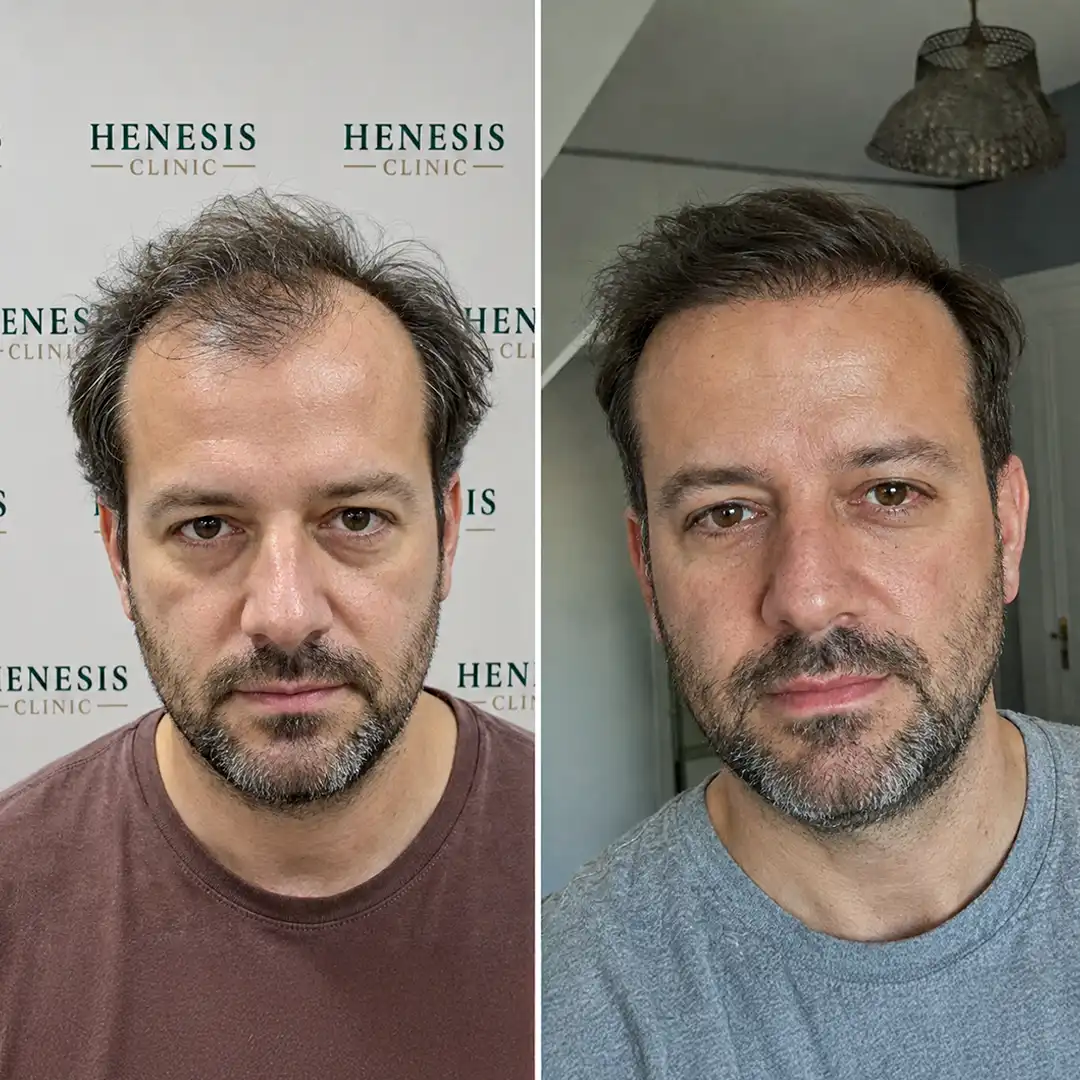
Unshaven Hair Transplant Before and After
Explore documented unshaven hair transplant cases with verified shaving, treatment, and follow-up context. Individual results vary.
 Before
After
Before
After
DHI Hair Transplant
Unshaven DHI Hair Transplant — 2,900 Grafts
- Technique
- DHI
- Graft Count
- 2,900 grafts
- Treatment Area
- Frontal Hairline, Bitemporal Recessions And Anterior Mid-Scalp
- Follow-Up
- 12-Month Follow-Up
Doctor: Dr. Timur Aksu, MD
View Clinical Case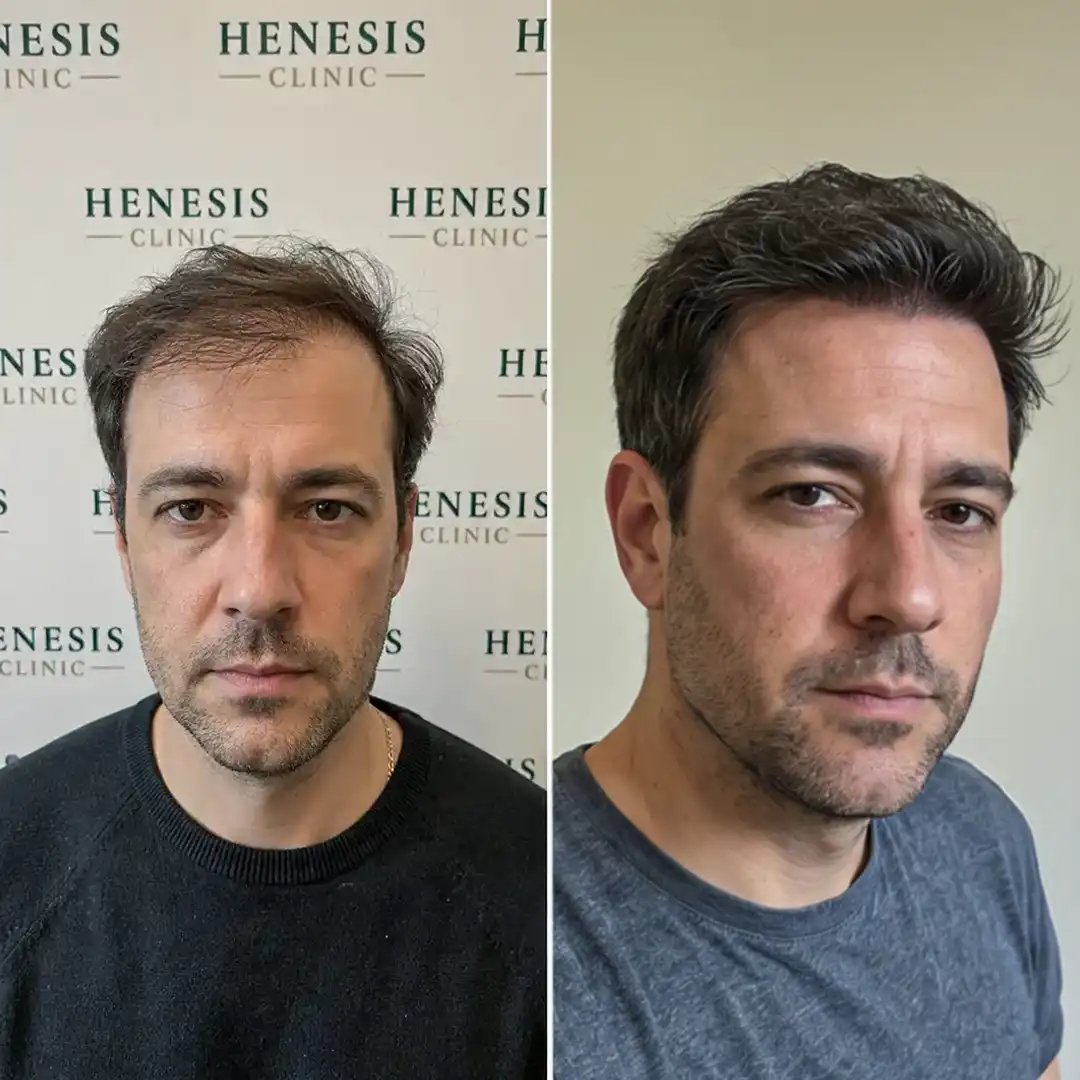 Before
After
Before
After
DHI Hair Transplant
Unshaven DHI Hair Transplant — 2,750 Grafts
- Technique
- DHI
- Graft Count
- 2,750 grafts
- Treatment Area
- Frontal Hairline, Bitemporal Recessions And Anterior Mid-Scalp
- Follow-Up
- 12-Month Follow-Up
Doctor: Dr. Timur Aksu, MD
View Clinical Case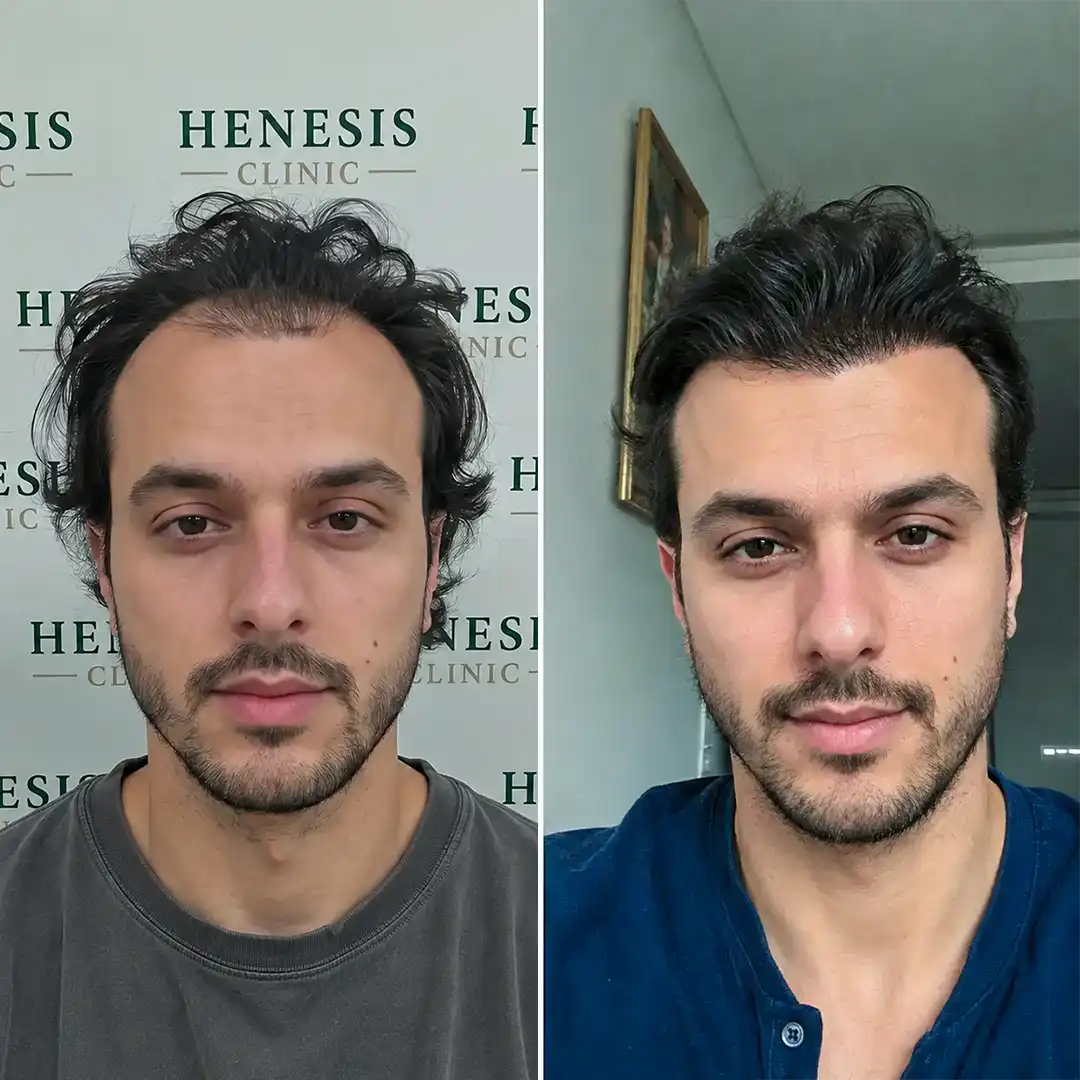 Before
After
Before
After
DHI Hair Transplant
Unshaven DHI Hair Transplant — 2,650 Grafts
- Technique
- DHI
- Graft Count
- 2,650 grafts
- Treatment Area
- Frontal Hairline, Bitemporal Recessions And Anterior Mid-Scalp
- Follow-Up
- 12-Month Follow-Up
Doctor: Dr. Nora Derin, MD
View Clinical CaseBalanced decision support
Potential Advantages and Limitations
Potential Advantages
- Preservation of more visible hair
- Less dramatic hairstyle change
- Possible donor-area concealment
- Potentially more discreet appearance during early healing
- Useful for selected patients avoiding a full shave
Limitations
- Not suitable for every patient
- Reduced visibility can complicate access
- Large treatment areas may be less practical
- Long hair can interfere with extraction or placement
- Partial shaving may still be needed
- The workflow may be more demanding
- Cosmetic discretion does not guarantee a better medical outcome
Unshaven treatment is a planning option, not a quality grade.
Country context with provider-level checks
Why Do Patients Consider Turkey for Unshaven Hair Transplantation?
Patients may consider Turkey because of its concentration of hair-restoration clinics, international-patient infrastructure, treatment coordination, price differences versus some markets and access to FUE and DHI workflows. Turkey itself does not establish quality or suitability. For broader country context, see Hair Transplant in Turkey.
What Should You Ask Before Choosing a No-Shave Clinic?
- What exactly do you mean by “no-shave”?
- Will the donor area be shaved?
- Will the recipient area be shortened?
- Is the pattern partial, donor-only or concealed?
- Who decides whether I am suitable?
- Which extraction method is used?
- Which placement workflow is used?
- Who creates recipient sites?
- Who performs the medical assessment?
- Are genuine no-shave cases available?
- Does keeping hair long change the quoted price?
- What will the donor area look like immediately afterward?
Accountability before discretion
Who Is Responsible for Each Stage at Henesis?
Shaving strategy is defined within the doctor-led treatment plan; it does not change the established responsibility model.
- 01AssessmentDoctor
- 02Donor evaluationDoctor
- 03Treatment planningDoctor
- 04Shaving strategyWithin the doctor-led plan
- 05Hairline / recipient designDoctor
- 06AnaesthesiaAnaesthesiologist
- 07ExtractionTrained technicians under doctor supervision
- 08Recipient-site creationDoctor directly
- 09PlacementTrained technicians under doctor supervision
- 10Final clinical reviewDoctor
Unshaven Hair Transplant Turkey FAQs
Direct answers about shaving patterns, FUE, DHI, candidacy, long hair, cost, visibility and results.
What is an unshaven hair transplant?
An unshaven hair transplant preserves more visible hair than a fully shaved procedure. The exact donor and recipient shortening pattern is confirmed individually and is not one standardized no-shave method.
Is a no-shave hair transplant really done without shaving?
Not necessarily. “No-shave” may describe limited, concealed or less visible shaving rather than no shortening anywhere. The planned pattern should be confirmed before treatment.
Can FUE be done without shaving?
Yes, in selected cases. FUE can be combined with different shaving strategies; donor access, hair length, recipient needs and treatment size determine feasibility.
Is DHI the same as an unshaven hair transplant?
No. DHI commonly describes implanter-assisted placement; unshaven describes the shaving or hair-length strategy. DHI is not automatically no-shave.
Can women have a hair transplant without shaving?
Selected women may be suitable for limited-shave planning, but diagnosis, donor capacity, recipient pattern, stability and access remain essential.
Can I keep my hair long during a hair transplant?
Sometimes, in selected cases. More existing hair may remain long, although limited donor or recipient shortening may still be required for access.
Does the donor area need to be shaved?
It may. Some plans use a limited or concealed donor shave; others require broader shortening. The doctor-led plan should state this clearly.
Is unshaven FUE more expensive?
There is no single universal price for unshaven FUE. Henesis unshaven hair transplant plans currently range from $3,190 to $5,450, while the final quotation depends on treatment scope, access, shaving strategy, technique and case complexity.
Is an unshaven transplant suitable for large bald areas?
Larger recipient areas may make full or partial shaving more practical because broader donor and recipient access can be required.
Does keeping hair long affect graft survival?
No survival percentage should be inferred from the shaving strategy. Donor quality, graft handling, recipient planning, placement and biological healing all matter.
How visible is a no-shave hair transplant afterward?
Visibility varies with the haircut, shaving pattern, recipient area, treatment size and early healing. Longer hair may conceal selected areas but cannot promise invisibility.
How long does recovery take?
Healing is individual. Longer hair does not remove redness, crusting, swelling or shedding, and no exact social-recovery time applies to everyone.
Can I return to work without people noticing?
That cannot be promised. Visibility depends on hairstyle, donor access, recipient location, treatment size and individual healing.
Does an unshaven hair transplant give better results?
No. Shaving strategy alone does not determine transplant quality or graft outcome. It is an access and appearance decision within the treatment plan.
How do I know which shaving option is right for me?
A doctor-led assessment should compare donor access, recipient needs, treatment size, hairstyle, existing hair and clinical practicality before recommending a pattern.
Medical references
Sources Supporting Key Clinical Information
Selected non-commercial literature supports the descriptions of nonshaven extraction, donor access, graft handling, procedural visibility and patient selection on this page.
- Nonshaven Follicular Unit Extraction: Personal ExperiencePMC · Clinical review
- Long Hair Follicular Unit Excision: Personal ExperiencePMC · Technical review
- No-Shave Long Hair Follicular Unit Excision Using an All-Purpose Skin-Responsive DevicePubMed · Retrospective study
Medical content reviewed by Dr. Nora Derin, MDUnshaven approaches, DHI and existing-hair planning focus · Published 24 August 2026 · Last reviewed 24 August 2026
