
It is a corrective plan for problems from previous transplantation, including unnatural design, poor direction, irregular density, scarring or donor damage.
Direct answers
Hair Transplant Repair in Turkey — Quick Answers
No. Tissue condition, graft position, donor depletion and previous damage may limit correction or make further surgery inappropriate.
Understand the LimitsNo. Planning may preserve, remove or redistribute selected grafts, add grafts, address scars or recommend no further surgery.
Review the Repair ModelHair transplant repair at Henesis is currently priced from $3,190 to $5,450. The final price depends on corrective scope, donor capacity and prior-procedure findings after assessment.
Repair Cost FactorsA different planning model
Repair Is Not Simply “Adding More Grafts”
A previous transplant changes the anatomy of both the donor and recipient areas. Repair therefore requires a different planning model from a first procedure.
Preserve
Useful grafts that integrate naturally.
Remove / Redistribute
Selected poorly placed grafts where clinically appropriate.
Add
New grafts only where donor capacity and recipient planning justify them.
Leave Alone
Areas where intervention may create more harm than benefit.
What should be preserved? What should be removed or redistributed? What can realistically be corrected? How much safe donor capacity remains?
Define the problem before the technique
Common Problems After a Previous Hair Transplant
Unnatural Hairline
A line may appear too straight, low, abrupt, asymmetric or insufficiently softened.
Wrong Direction or Angle
Hair may grow in a direction that does not integrate with surrounding hair.
Poor or Patchy Density
Uneven coverage, gaps or visible scalp can remain.
Plug-Like Appearance
Large or poorly distributed follicular groupings may look unnatural.
Donor Overharvesting
Extraction can leave visible thinning, patchiness or localized depletion.
FUT / Linear Scar
A strip-surgery scar may remain visible through shorter hair.
FUE Scarring
Diffuse extraction marks or donor irregularity may become visible.
Cobblestoning or Pitting
The recipient skin surface may appear irregular around graft sites.
Progressive Hair Loss
Native hair may continue thinning around transplanted hair; this is not automatically technical failure.
Dissatisfaction has different causes
Is It Actually a Failed Hair Transplant?
Design, angle, distribution or donor use may be problematic.
Growth may be lower or more variable than expected.
Native hair may have continued to thin after treatment.
The result may still be maturing, or expectations may exceed achievable anatomy.
Do not rush revision
When Should a Hair Transplant Be Assessed for Repair?
Repair planning should not be rushed before the previous procedure has had sufficient time to heal and mature. Assessing too early can confuse ongoing recovery with a final problem.
- Elapsed time and growth progression
- Recipient and donor healing
- Scarring and tissue condition
- Ongoing native hair loss
- The previous technique and treatment scope
Map what remains
What Does a Repair Assessment Evaluate?
- Existing Hairline
- Height, shape, symmetry and graft distribution.
- Graft Direction
- Angle, orientation and integration.
- Recipient Density
- Where grafts grew and where coverage is irregular.
- Donor Capacity
- Remaining usable reserve and safe extraction options.
- Donor Damage
- Overharvesting, scarring and depletion.
- Scar Tissue
- Recipient and donor scars and tissue quality.
- Native Hair
- Current and likely future loss pattern.
- Medical Context
- Scalp concerns or unexplained loss requiring evaluation.
- Previous Records
- Dates, reported graft count, technique, operative records and photographs where available.
Corrective design under existing constraints
Can an Unnatural Hairline Be Repaired?
Sometimes. Planning may involve redesigning the visible edge, preserving acceptable grafts, adding finer grafts, removing selected low or incorrectly directed grafts, or redistributing visual density.
Lowering or raising an already transplanted hairline is not merely a drawing exercise; previous graft placement, scarring and remaining donor supply constrain what can be achieved.
Sometimes—but first identify why
Can Poor Density Be Improved?
Low initial graft numbers, poor distribution, variable growth, progressive native hair loss, donor limitation or a large recipient area can create a sparse result. More grafts do not automatically create a better density plan.
Donor preservation remains central.
Added density should be judged against remaining reserve and possible future loss—not only the current gap.
Camouflage is not scar removal
Hair Transplant Scar Repair
Repair may concern FUT linear scars, FUE extraction scarring or visible donor irregularity, and recipient-area scarring where relevant. Options depend on scar type, tissue condition, donor reserve and the corrective objective. Follicle camouflage may sometimes reduce contrast, but growth can be less predictable and complete scar disappearance should not be promised.
Linear Scar
Selected follicles may help reduce contrast in a strip scar if tissue and donor conditions permit.
Diffuse Extraction Marks
Planning focuses on visible marks, donor depletion and whether further extraction could worsen the area.
A finite resource cannot be recreated
Can an Overharvested Donor Area Be Repaired?
Donor depletion cannot simply be replaced with unlimited new donor hair. The first objective may be to stop further donor damage rather than perform another aggressive extraction.
- Visual redistribution where feasible
- Selected graft placement
- Hairstyle adaptation
- Scalp micropigmentation context
- Selected repair cases may require assessment of beard or body hair when remaining scalp donor is insufficient. Body Hair Transplant
- Avoiding further extraction
Additional treatment is not always correction
Is a Second Hair Transplant the Same as a Repair?
No. A second transplant may address progressive loss, a newly affected area, planned staged treatment or additional density. Repair specifically addresses a problem created or left by previous transplantation. Sometimes a second procedure does both.
Second Transplant
Extends or continues treatment because needs have changed.
Repair / Revision
Corrects design, graft, donor, density or scar concerns from previous work.
The objective comes before the label
FUE or DHI for Hair Transplant Repair?
FUE describes extraction, while DHI commonly describes an implanter-assisted placement workflow. Repair may involve extraction, graft removal, recipient-site creation, placement or scar work; technique choice follows the corrective objective.
Identify problem→Map corrective actions→Select appropriate workflow
Plan beyond today’s hairline
Why Remaining Donor Capacity Matters More in Repair Cases
A first transplant consumes part of a finite donor resource. Repair planning must account for previous extraction, miniaturization, donor density, safe zones, potential future loss and later treatment needs.
A repair that improves the hairline today but exhausts the donor reserve may create a larger long-term problem.
Diagnose → preserve → correct → protect
How Does Henesis Plan a Repair Procedure?
- 01
Previous Transplant Review
Assessment and available records are reviewed by the doctor.
- 02
Donor Assessment
Remaining reserve and donor damage are evaluated by the doctor.
- 03
Problem Mapping
Hairline, recipient, graft and scar concerns are mapped.
- 04
Correction Plan
Treatment and recipient design are defined by the doctor.
- 05
Extraction Where Needed
After anaesthesia by the anaesthesiologist, trained technicians extract under doctor supervision.
- 06
Recipient-Site Creation
The doctor creates recipient sites directly.
- 07
Placement
Trained technicians place grafts under doctor supervision.
- 08
Final Review
The doctor performs the final clinical review.
Assessment-based quotation
Hair Transplant Repair Cost in Turkey
Hair transplant repair at Henesis is currently priced from $3,190 to $5,450. The final price depends on the corrective scope, donor capacity, findings from the previous procedure and the treatment plan confirmed after assessment.
Understand Hair Transplant Cost Methodology- Henesis plans
- $3,190–$5,450
- Pricing model
- Corrective scope
- Final quote
- After assessment
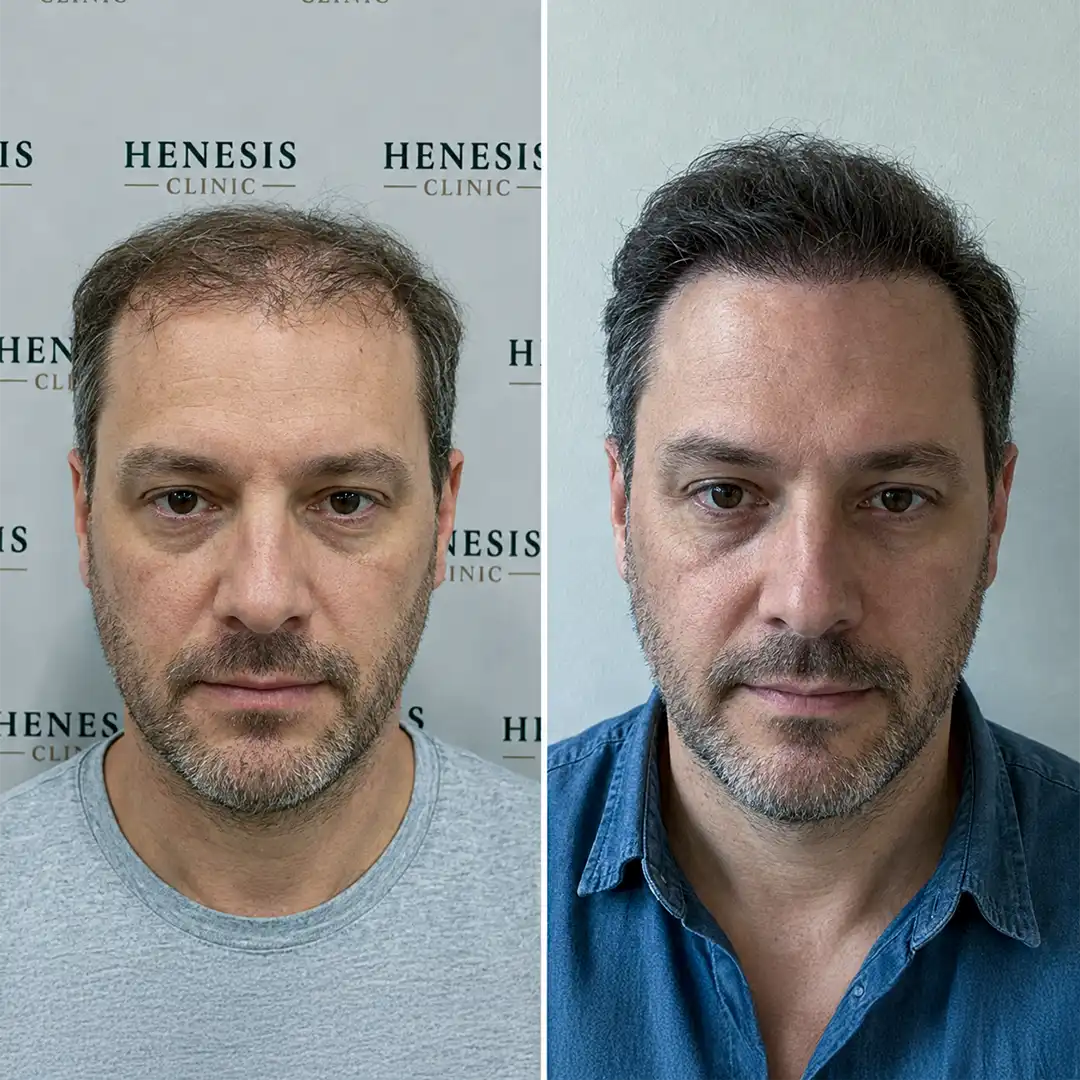
Hair Transplant Repair Before and After
Explore documented repair cases with verified previous-procedure history, correction strategy, and follow-up context. Individual results vary.
 Before
After
Before
After
Combined Sapphire FUE + DHI Hair Transplant
Repair Hair Transplant — 4,200 Grafts Combined Sapphire FUE + DHI
- Technique
- Combined Sapphire FUE + DHI
- Graft Count
- 4,200 grafts
- Treatment Area
- Frontal Hairline, Bitemporal Recessions, Anterior Mid-Scalp And Central Core
- Follow-Up
- 12-Month Follow-Up
Doctor: Dr. Timur Aksu, MD
View Clinical Case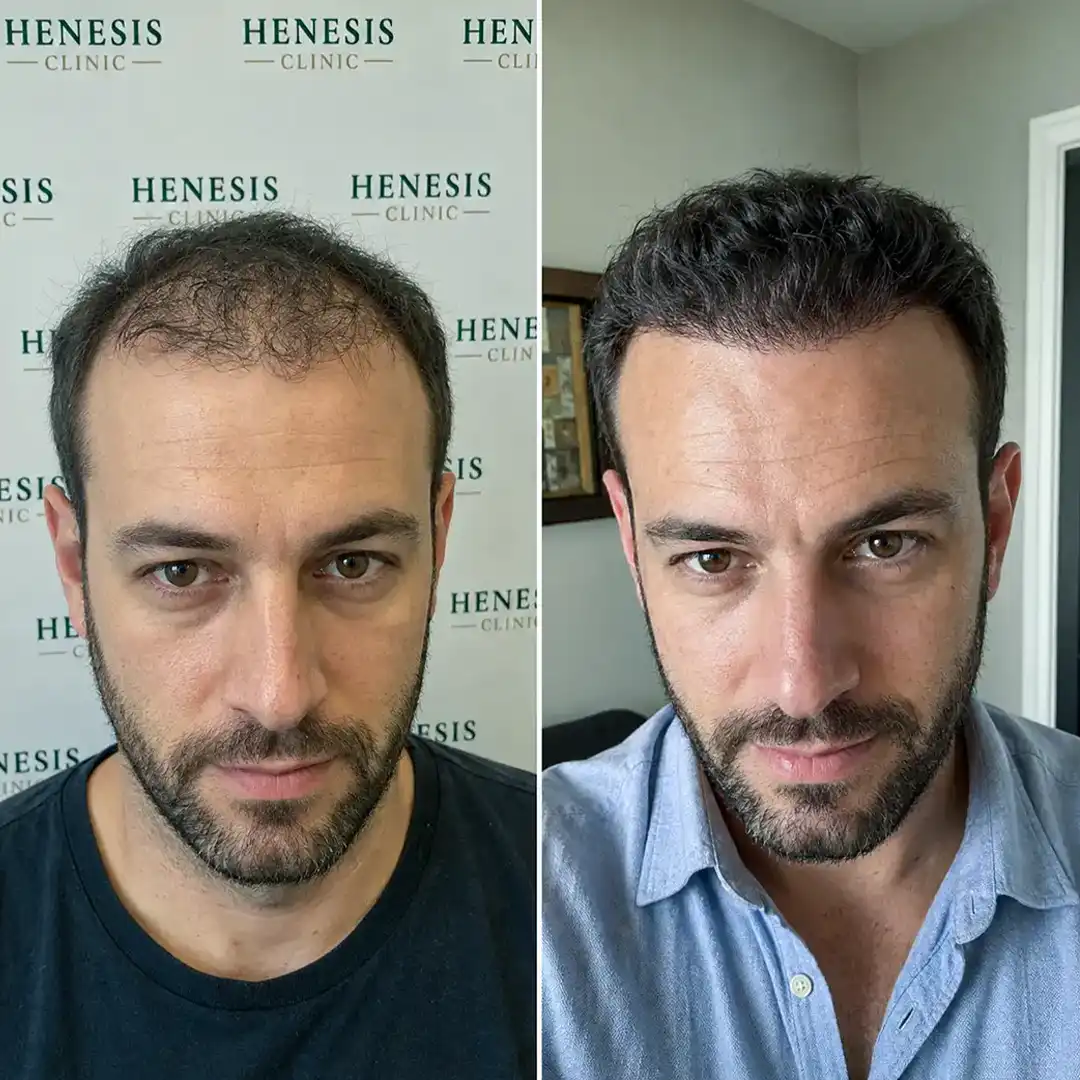 Before
After
Before
After
Combined Sapphire FUE + DHI Hair Transplant
Repair Hair Transplant — 4,100 Grafts Combined Sapphire FUE + DHI
- Technique
- Combined Sapphire FUE + DHI
- Graft Count
- 4,100 grafts
- Treatment Area
- Frontal Hairline, Bitemporal Recessions, Anterior Mid-Scalp And Crown
- Follow-Up
- 12-Month Follow-Up
Doctor: Dr. Timur Aksu, MD
View Clinical CaseSome damage is only partly correctable
What Cannot Always Be Fixed?
Severe donor depletion, extensive scarring, poor tissue quality, a large low hairline requiring removal, multiple previous surgeries, progressive loss or insufficient donor reserve may limit correction.
Sometimes the safest plan is to not operate further.
A responsible assessment should explain what is realistically correctable and where another procedure may create more harm than benefit.
Diagnostic planning before graft offers
Choosing a Hair Transplant Repair Clinic in Turkey
Repair expertise should be judged by diagnostic planning and documented corrective work, not simply by the number of grafts offered. Turkey provides access to international treatment infrastructure, but location alone does not establish suitability or quality. See broader Hair Transplant in Turkey guidance.
Questions to Ask
- Who evaluates donor damage?
- Who creates the corrective design?
- Are graft-removal options discussed?
- Is remaining donor reserve planned?
- Are genuine repair cases available?
- Does the clinic explain what cannot be fixed?
- Who creates recipient sites?
- Are future hair-loss needs included?
Hair Transplant Repair FAQs
Direct answers about previous transplant correction, donor limitations, scars, timing, technique and cost.
Why do hair transplants fail?
A poor result can have different causes, including inappropriate candidate selection, poor hairline design, graft-direction problems, excessive donor extraction, limited growth, progressive native hair loss or inadequate planning. A repair assessment should identify the likely cause before deciding whether further surgery is appropriate.
Can a failed hair transplant be repaired?
Some problems can be improved, but not every case can be fully corrected. The plan depends on the original problem, tissue, graft position and remaining donor capacity.
How do you fix a bad hair transplant?
Options may include preserving useful grafts, adding selected grafts, softening a hairline, removing poorly placed grafts, scar camouflage or avoiding further surgery.
Can an unnatural hairline be corrected?
Sometimes. Existing grafts, scar tissue, hairline position and donor reserve determine whether softening, removal or redistribution is realistic.
Can poorly angled grafts be removed?
Selected grafts may sometimes be removed, but feasibility and the risk of scarring or tissue change require individual assessment.
Can hair transplant density be improved?
Sometimes, after identifying whether sparse appearance results from distribution, growth, progressive loss, treatment size or donor limitation.
Can an overharvested donor area be repaired?
Appearance may sometimes be improved, but depleted donor hair cannot be recreated. Preventing further damage may be the first priority.
Can FUT scars be covered with hair transplantation?
Selected FUT scars may be camouflaged with follicles when tissue conditions permit, although growth can be less predictable in scar tissue.
Can FUE scars be repaired?
Selected strategies may reduce visible contrast or donor irregularity, but diffuse depletion and scarring may only be partly correctable.
How long should I wait before considering a repair?
There is no single universal waiting period. The previous procedure needs sufficient healing and maturation before its final condition can be assessed responsibly.
Is a second hair transplant the same as a repair?
No. A second transplant may treat new or progressive loss. Repair specifically corrects a problem related to previous transplantation.
Can grafts from a previous transplant be reused?
In selected cases, grafts removed during corrective planning may be evaluated for possible reuse. Reimplantation is not assumed and depends on the extraction method, follicle condition and the corrective plan.
What happens if I do not have enough donor hair left?
The plan may need to prioritize limited areas, use non-surgical camouflage context or avoid further extraction rather than promise unattainable coverage.
Can repair surgery make the result worse?
Yes, further surgery can create additional donor or recipient damage when poorly indicated. This is why limits and no-treatment options must be discussed.
Is FUE or DHI better for repair?
Neither label is inherently better for repair. The corrective objective determines whether extraction, removal, site creation or a particular placement workflow is needed.
How much does hair transplant repair cost in Turkey?
Hair transplant repair at Henesis is currently priced from $3,190 to $5,450. The final price depends on the corrective scope, donor capacity, findings from the previous procedure and the treatment plan confirmed after assessment.
Can every failed hair transplant be fixed?
No. Some damage can only be partly improved, and insufficient donor reserve or tissue limitations may make further surgery inappropriate.
What photos should I send for a repair assessment?
Send clear current views of the hairline, recipient areas, donor area and scars, plus pre-procedure photographs and treatment records when available.
Medical references
Sources Supporting Key Clinical Information
Selected non-commercial literature supports the discussion of corrective planning, limited donor supply, unnatural grafts, scarring and hair-transplant complications on this page.
- Revision of the Unfavorable Result in Hair TransplantationPMC · Surgical review
- The Art of Repair in Surgical Hair Restoration, Part IPubMed · Corrective surgery review
- Complications in Follicular Unit Excision Hair Transplantation: Current Evidence and Practical ApproachesPMC · Evidence review
Medical content reviewed by Dr. Timur Aksu, MDHair-restoration content · Published 24 August 2026 · Last reviewed 24 August 2026
Previous procedure assessment
Concerned About a Previous Hair Transplant?
Send clear photos of your current hairline, donor area and any previous procedure information you have. A repair assessment can identify what appears usable, what may need correction and whether further surgery is appropriate.
