
A beard transplant is one form of facial hair transplant. Individual follicles are harvested from a suitable donor area and placed into selected beard, mustache, goatee or sideburn regions.
Facial Hair Restoration in Istanbul
Beard Transplant in Turkey
A beard transplant in Turkey restores selected facial-hair areas by transferring suitable donor follicles into the beard, mustache, goatee or sideburn regions. At Henesis Clinic in Istanbul, planning considers facial shape, existing beard growth, donor characteristics, hair direction, angle and the distribution required for the intended result.
Direct answers
Beard Transplant in Turkey — Quick Answers
Henesis beard transplant plans currently range from $2,233 to $3,815. The final price depends on facial zones, graft requirement, donor work, treatment workflow and confirmed package scope.
See Beard PricingCheeks, jawline, sideburns, mustache and goatee areas can be considered depending on the case.
Facial AreasTransplanted follicles from a suitable donor area generally retain donor characteristics long term, although cosmetic appearance can change.
Direction and distribution
A Beard Transplant Is a Direction and Distribution Problem, Not Just a Graft-Count Problem
Direction changes by facial zonePlacement angle near the skin mattersDensity should not be uniform everywhereTransitions should connect naturallySymmetry should not look mechanicalMaximum graft count is not the goal
A natural beard should be planned as connected facial zones rather than filled as one uniform surface.
Facial hair restoration scope
Which Facial Hair Areas Can Be Restored?
Sparse Cheeks
Patchy Beard Zones
Jawline Definition
Sideburn Gaps
Mustache
Goatee / Chin
Selected Scar-Related Gaps
Beard-Line Refinement
Design before implantation
How Is a Natural Beard Shape Planned?
Beard design should be agreed before implantation rather than improvised from a preset template.
Facial proportionsExisting beard patternCheek-line heightJawline transitionMustache connectionChin / goatee densityDirection by zoneStyling preference
Donor-to-face matching
Where Does the Hair for a Beard Transplant Come From?
Scalp donor hair is commonly used when its characteristics are suitable, although donor selection depends on available hair, calibre, texture and the facial area being restored.
Donor Selection Considerations
- Scalp donor availability
- Texture and calibre match
- Finite donor capacity
- Facial zone being restored
Will Scalp Hair Look Natural in the Beard?
It can in appropriately selected cases, but texture, calibre, growth characteristics and placement angle influence how closely transplanted hair blends with native facial hair.
Transplanted follicles generally retain important donor-site growth characteristics after transplantation.Procedure overview
How Is a Beard Transplant Performed?
- 01
Facial Assessment & Design
The doctor evaluates facial proportions, existing beard growth and the intended treatment zones.
- 02
Donor Assessment
Donor capacity, calibre and matching characteristics are assessed before extraction.
- 03
FUE-Based Extraction
Trained technicians extract follicles under doctor supervision according to the approved donor plan.
- 04
Graft Organization
Follicles are prepared and organized according to placement requirements.
- 05
Recipient-Site Creation
The doctor creates recipient sites according to the planned direction, angle and distribution.
- 06
Graft Placement & Final Review
Trained technicians place grafts under doctor supervision, followed by the doctor’s final clinical review.
Anaesthesia is administered by an anaesthesiologist before the extraction and recipient-site stages, according to the confirmed clinical plan.
Explore FUE Extraction GuidanceTechnique follows the facial plan
FUE or DHI for Beard Transplantation?
FUE primarily describes donor extraction, while DHI describes an implanter-assisted recipient-placement workflow. Either may form part of beard restoration depending on facial access, placement strategy, graft handling and the treatment plan.
Suitability before procedure
Who May Be Suitable for a Beard Transplant?
May Be Considered When
- Beard areas are naturally sparse or patchy
- Scar-related gaps are stable
- Restoration goals are defined
- Donor supply is adequate
- Facial skin is suitable
Needs More Assessment When
- Skin disease is active
- Scarring alopecia is uncertain
- Donor supply is poor
- Density expectations are unrealistic
- Facial hair loss is unexplained
Medical context before cosmetics
Why Is Facial Hair Sparse or Patchy?
- Natural or genetic growth pattern
- Scarring or previous trauma
- Previous surgery
- Alopecia or inflammatory conditions
- Other causes requiring medical assessment
New, unexplained or changing facial-hair loss should be medically evaluated before cosmetic transplantation is planned.
Case-specific planning variables
What Determines Graft Planning for a Beard Transplant?
A “full beard” is not a fixed graft number. Facial size, existing beard, desired coverage, hair calibre and donor supply determine planning.
Treatment Zones
A localized mustache or goatee case differs substantially from multi-zone beard restoration.
Existing Facial Hair
Current growth affects where additional follicles are needed and how transitions are designed.
Desired Coverage
The goal may be patch correction, contour refinement or broader coverage.
Hair Calibre / Texture
Hair characteristics influence visual coverage and donor-to-face matching.
Donor Capacity
Available donor supply limits how much facial restoration can be planned safely.
Beard Design / Direction
The planned beard outline, transition zones, hair direction and natural-looking flow also affect how grafts are distributed.
Beard Transplant Before & After Results
Explore documented beard and facial-zone cases with procedure context, graft count where available and follow-up timing. Individual results vary.
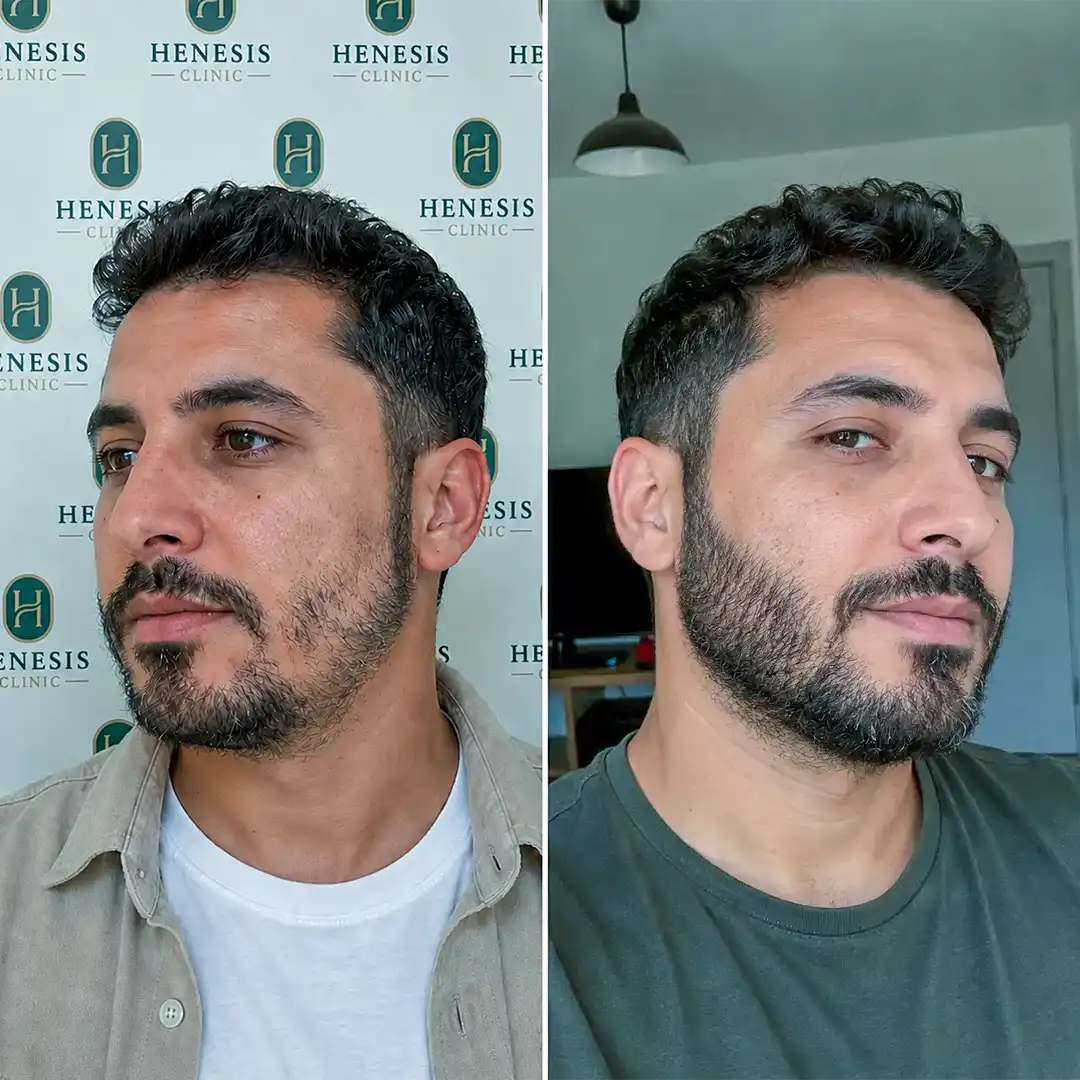 Before
After
Before
After
DHI Beard Transplant
Beard Transplant — 2,200 Grafts
- Technique
- DHI
- Graft Count
- 2,200 grafts
- Treatment Area
- Cheeks, Jawline And Beard Connection Areas
- Follow-Up
- 12-Month Follow-Up
Doctor: Dr. Nora Derin, MD
View Clinical Case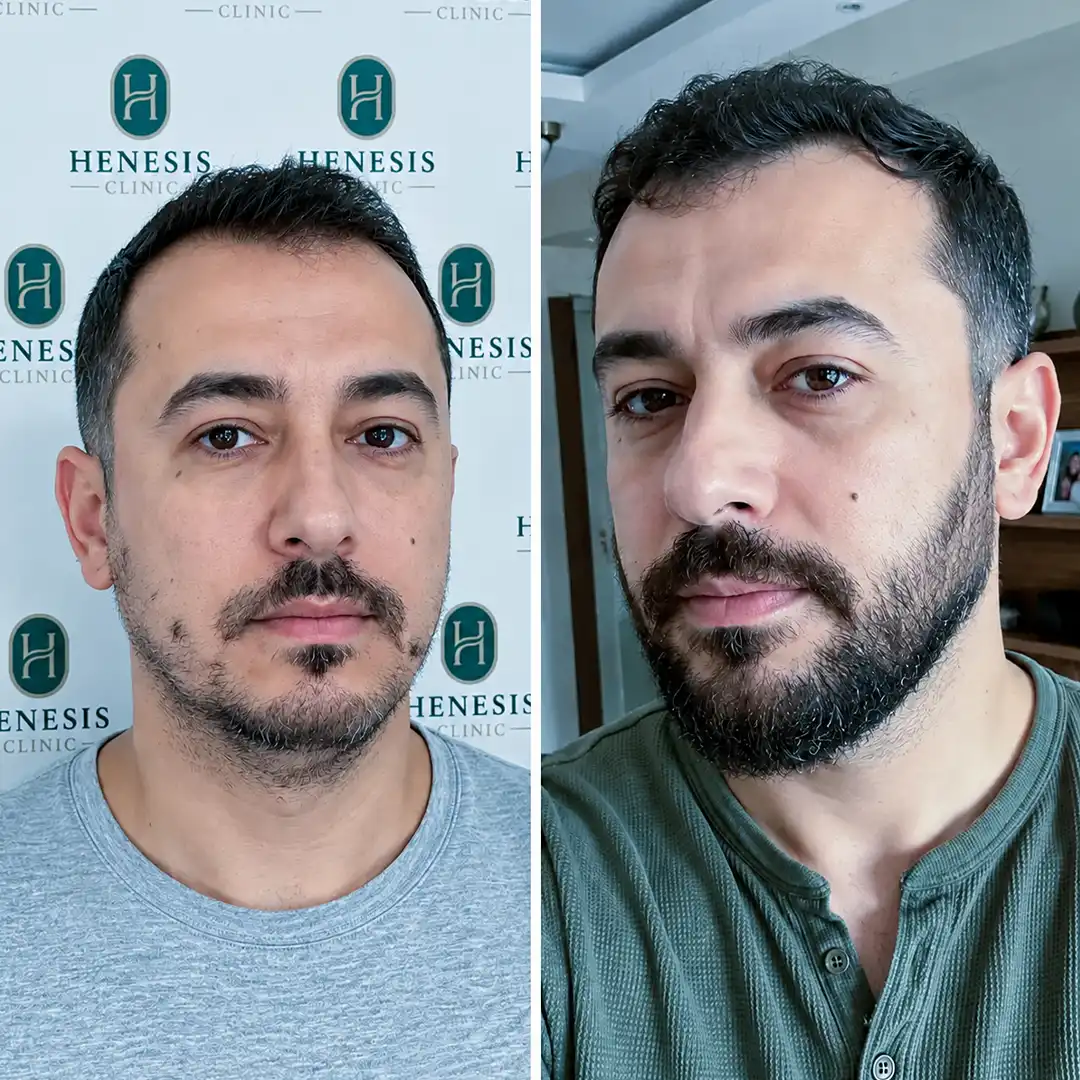 Before
After
Before
After
DHI Beard Transplant
Beard Transplant — 2,300 Grafts
- Technique
- DHI
- Graft Count
- 2,300 grafts
- Treatment Area
- Cheeks, Jawline And Beard Connection Areas
- Follow-Up
- 12-Month Follow-Up
Doctor: Dr. Timur Aksu, MD
View Clinical Case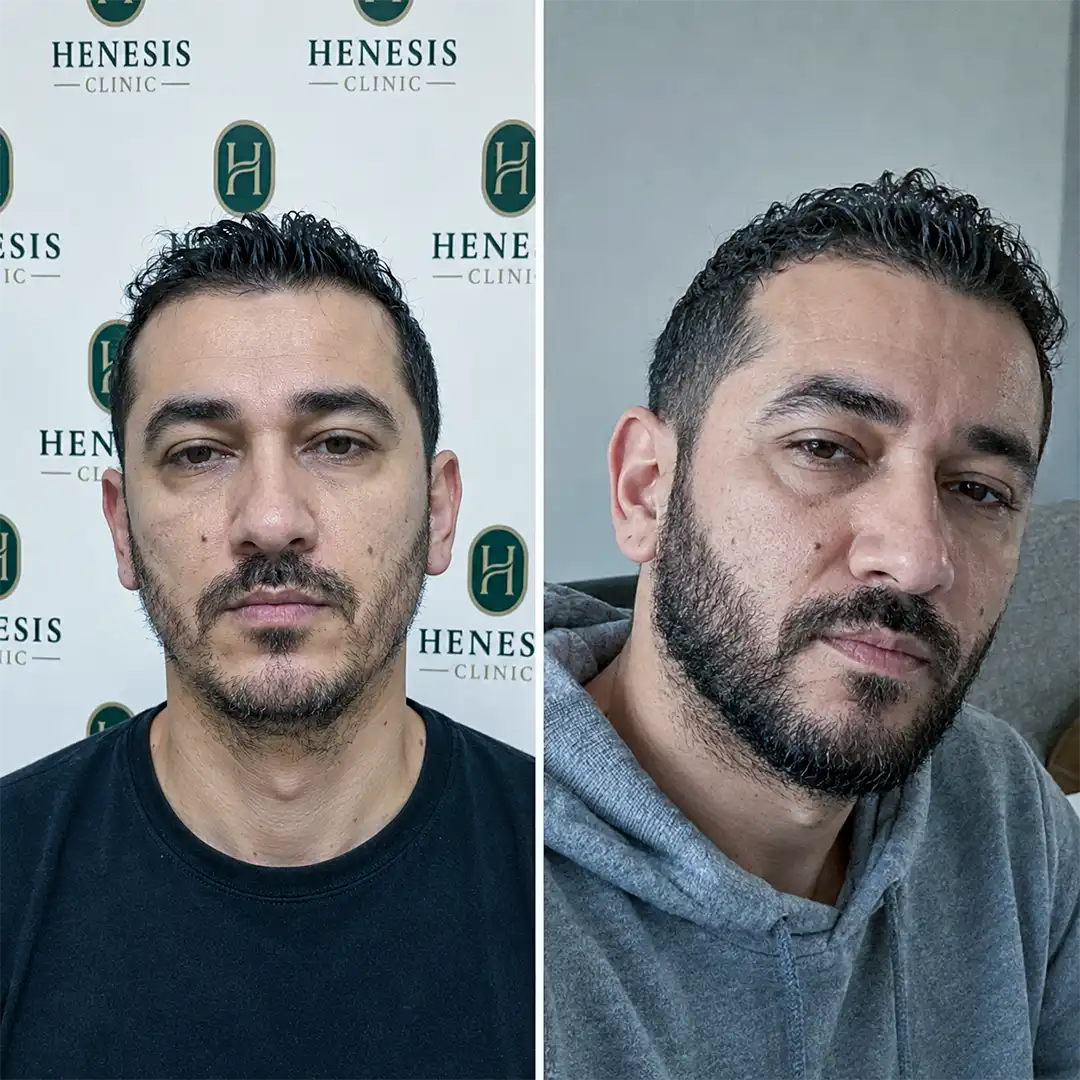 Before
After
Before
After
DHI Beard Transplant
Beard Transplant — 2,150 Grafts
- Technique
- DHI
- Graft Count
- 2,150 grafts
- Treatment Area
- Cheeks, Jawline And Beard Connection Areas
- Follow-Up
- 12-Month Follow-Up
Doctor: Dr. Nora Derin, MD
View Clinical CaseConfirmed Henesis pricing
Beard Transplant Cost in Turkey
Henesis beard transplant plans currently range from $2,233 to $3,815. Final pricing depends on the facial zones being restored, graft requirement, donor work, treatment workflow and package scope confirmed after assessment.
A localized mustache, goatee or patchy-beard case may require a different treatment scope from a broader cheek, jawline or full-beard restoration.
See Full Pricing Methodology- Henesis Beard Plans
- $2,233–$3,815
- Pricing Basis
- Case-specific treatment scope
- Treatment Scope
- Localized restoration to multi-zone beard planning
- Final Quote
- Confirmed after individual assessment
Compact recovery overview
Beard Transplant Recovery: What Should Patients Expect?
- First days
Facial redness, swelling and scabbing can occur.
- First days and weeks
Recipient crusting and visible healing evolve.
- Following weeks
Transplanted hairs may shed during the early phase.
- Following months
New growth develops progressively.
Direct answer
Does a Beard Transplant Leave Scars?
Beard transplantation is not scarless. FUE-based donor extraction creates many small donor sites, while recipient placement creates small facial sites that heal individually.
Visibility depends on skin characteristics, healing, extraction and placement technique, and any pre-existing scarring being treated.
Facial-hair-specific limitations
Beard Transplant Risks and Limitations
Unnatural Direction or Placement Angle
Poorly aligned placement can make facial hair grow against the natural flow of nearby beard hair.
Excessive or Uneven Facial Density
Uniform or overly aggressive density can create an unnatural appearance and complicate tissue handling.
Overly Geometric Symmetry
Perfectly mirrored beard borders may look artificial because natural facial hair is not mechanically symmetrical.
Visible Recipient Irregularity
Healing or site placement can sometimes leave visible texture or irregularity.
Donor Overharvesting
Facial restoration still depends on a finite donor supply that must be preserved.
Skin Irritation, Folliculitis or Healing Variation
Redness, irritation or follicular inflammation can occur during healing and varies between patients.
Generic surgical risks and aftercare are covered in our Medical Standards and patient guidance.
Country context
Why Do Patients Choose Turkey for Beard Transplants?
Turkey combines competitive pricing, a concentration of hair-restoration providers, international-patient support and accessible travel through Istanbul.
Price differences versus other markets
Provider concentration
International-patient infrastructure
Frequent travel connections
Country choice does not replace facial design, physician responsibility, donor planning and documented beard results.
Provider selection
How to Compare Beard Transplant Clinics in Turkey
Real Beard Cases
Can the clinic show comparable facial-hair results?
Beard Designer
Who agrees the facial shape before implantation?
Direction Control
Who controls recipient angle and direction by zone?
Donor Selection
How are texture, calibre and donor capacity matched?
Realistic Graft Scope
Are full-beard promises explained without a fixed sales number?
Written Scope
Are costs, responsibilities and aftercare clear?
Separate clinical context
Afro-Textured Beard Restoration
Curly or coiled follicle trajectories and facial-hair characteristics can change extraction and placement planning.
This page covers general beard restoration. Afro-textured cases may require additional planning around follicle trajectory, donor-to-beard matching and zone-specific direction.
- Curved follicle extraction
- Donor-to-beard matching
- Zone-specific direction
- Documented Afro beard cases
Medical references
Sources Supporting Key Clinical Information
Selected non-commercial sources support the facial design, donor, extraction, scarring and complication information on this page.
- Beard and Moustache ReconstructionPMC · Clinical review
- Follicular Unit Extraction Hair Transplant: Curves AheadPMC · Technique and complication review
- Hair TransplantationNCBI Bookshelf · StatPearls
Medical content reviewed by Dr. Timur Aksu, MDLead Hair Restoration Physician · Published 23 August 2026 · Last reviewed 23 August 2026
Beard Transplant FAQs
Answer-first guidance on beard design, donor hair, mustache and goatee restoration, costs, recovery, scars and candidacy.
What is a beard transplant?
A beard transplant moves individual follicular units from a suitable donor area into selected facial-hair zones such as the beard, mustache, goatee or sideburns.
How much does a beard transplant cost in Turkey?
Henesis beard transplant plans currently range from $2,233 to $3,815. The final quote depends on facial treatment zones, graft requirement, donor work, treatment workflow and confirmed package scope.
Where does beard transplant donor hair come from?
Scalp donor hair is commonly used when its availability, texture and calibre are suitable for the intended facial area.
Does scalp hair look natural in a beard?
It can in selected cases, but texture, calibre, donor growth characteristics and placement angle affect how closely it blends with native facial hair.
How many grafts are needed?
There is no fixed full-beard number. Facial size, existing hair, zones, desired coverage, calibre and donor capacity determine planning.
How long do beard transplants last?
Follicles from a suitable donor area generally retain donor characteristics long term, although appearance and surrounding facial hair can change.
Does a beard transplant leave scars?
It is not scarless. FUE-based harvesting creates small donor sites and facial placement creates small recipient sites that heal individually.
How long is recovery?
Early facial redness, swelling, scabbing and crusting evolve over days and weeks. Shedding may follow before progressive growth develops.
When can I shave after a beard transplant?
Shaving should follow the clinic’s case-specific aftercare protocol. A universal day should not replace instructions based on facial healing.
Can mustache or goatee areas be transplanted?
Yes, in suitable cases. Direction, central density and transitions between the mustache, goatee, chin and surrounding beard require planning.
Can a beard transplant fill patchy cheeks?
Selected stable cheek gaps may be considered when facial skin, donor supply and the intended direction and distribution are suitable.
FUE or DHI for beard transplantation?
FUE describes donor extraction and DHI describes a recipient-placement workflow. Either may form part of the complete beard plan.
Who may not be suitable?
People with active skin disease, uncertain facial-hair loss, unsuitable scarring, poor donor supply or unrealistic density expectations may need further assessment or may not be candidates.
Can Afro-textured beard hair be transplanted?
Selected patients can be candidates, but curly or coiled follicle trajectories and facial-hair characteristics require relevant planning. See the Afro Beard Transplant Guide.
