
Yes, when the hair-loss pattern, donor supply and scalp condition are suitable for transplantation.
Hair Transplant for Women in Istanbul
Female Hair Transplant in Turkey
A hair transplant for women may be appropriate for selected patterns of permanent or stable hair loss, but suitability depends on the cause of thinning, donor quality, existing hair and long-term progression. At Henesis Clinic, treatment planning begins with the hair-loss pattern before a technique such as FUE or DHI is considered.
Direct answers
Female Hair Transplant in Turkey — Quick Answers
No. Diffuse or active hair loss may require diagnosis and medical management rather than immediate transplantation.
Henesis treatment plans range from $3,190 to $5,450 after individual assessment.
See Treatment PricingSelected limited-shave workflows may be possible, depending on donor access, graft requirement and treatment area.
Shaving OptionsPattern before procedure
Female Hair Loss Is Not One Diagnosis
The visible pattern helps guide assessment, but the cause of loss matters more than its appearance alone.
The visible pattern matters, but the cause matters more.
Pattern and candidacy
Which Female Hair-Loss Patterns May Be Suitable for Transplantation?
May Be Considered
- Hairline recession or high forehead
- Temporal recession
- Localized frontal thinning
- Stable traction-related loss
- Selected scar or previous-surgery cases
Requires Further Assessment
- Diffuse or unstable thinning
- Unexplained shedding
- Active scalp disease
- Significant donor miniaturization
- Limited donor supply
Suitability depends on the cause, stability and donor pattern—not simply on the visible area of thinning.
Female Hair Transplant Before & After Results
Explore documented female scalp hair transplant cases with verified treatment and follow-up context. Individual results vary.
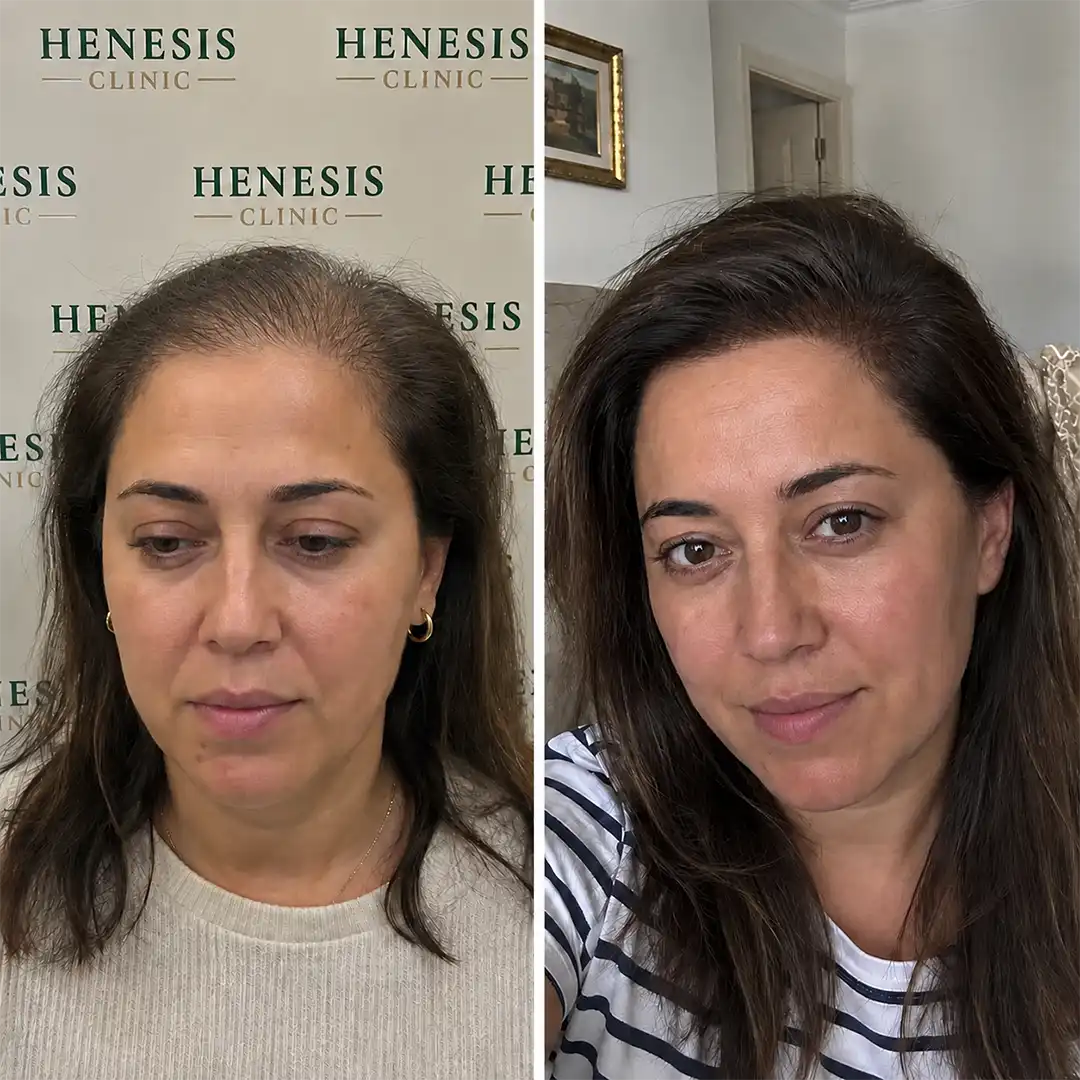 Before
After
Before
After
DHI Hair Transplant
Female DHI Hair Transplant — 2,750 Grafts
- Technique
- DHI
- Graft Count
- 2,750 grafts
- Treatment Area
- Frontal Hairline, Bitemporal Recessions And Anterior Mid-Scalp
- Follow-Up
- 12-Month Follow-Up
Doctor: Dr. Nora Derin, MD
View Clinical Case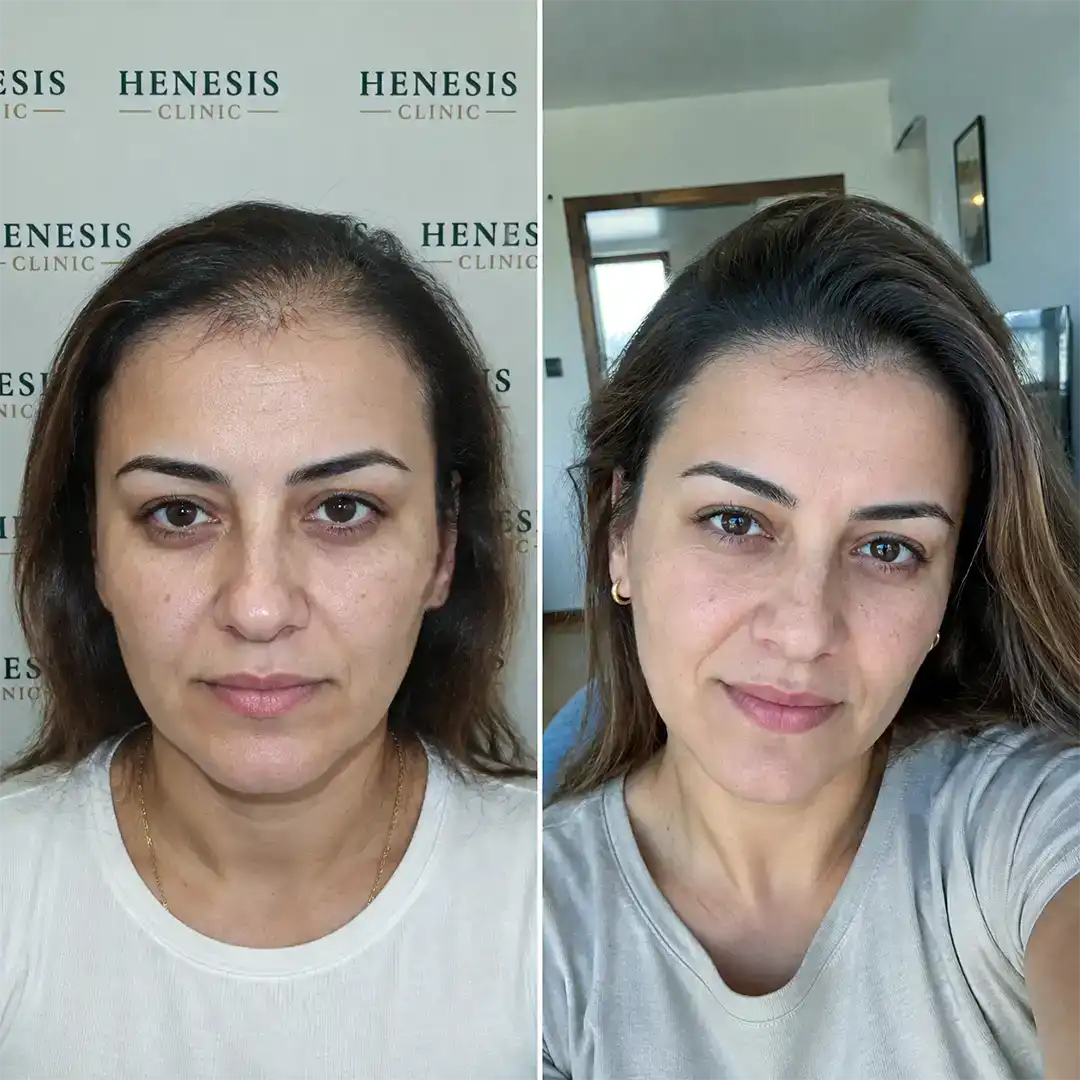 Before
After
Before
After
DHI Hair Transplant
Female DHI Hair Transplant — 2,850 Grafts
- Technique
- DHI
- Graft Count
- 2,850 grafts
- Treatment Area
- Frontal Hairline, Bitemporal Recessions And Anterior Mid-Scalp
- Follow-Up
- 12-Month Follow-Up
Doctor: Dr. Nora Derin, MD
View Clinical Case Before
After
Before
After
DHI Hair Transplant
Female DHI Hair Transplant — 2,900 Grafts
- Technique
- DHI
- Graft Count
- 2,900 grafts
- Treatment Area
- Frontal Hairline, Bitemporal Recessions And Anterior Mid-Scalp
- Follow-Up
- 12-Month Follow-Up
Doctor: Dr. Nora Derin, MD
View Clinical CaseHigh-forehead intent
Can Hair Transplantation Lower a High Female Hairline?
In selected women, yes. Transplantation can be used to advance or reshape the frontal hairline when donor supply and facial proportions are suitable.
Hairline design should consider long-term appearance, natural irregularity, direction and possible future hair loss. This is transplant-based hairline restoration, not forehead-reduction surgery.
Cause-specific suitability
Can Hair Transplantation Treat Traction Alopecia?
Some stable traction-related hair-loss patterns may be considered for transplantation, but active traction, scarring, inflammation, donor supply and the extent and stability of follicular loss must be assessed first.
May Be Considered When
- Traction has stopped
- Loss appears stable
- The scalp is clinically suitable
- Donor supply is adequate
Requires Caution
- Tight styles are continuing
- Inflammation is active
- Scarring is significant
- The diagnosis is uncertain
Traction-related loss can affect different hair types and backgrounds. Where Afro-textured hair characteristics are relevant, additional follicle and donor planning may be required.
Explore the Afro Hair Transplant GuidePractical planning differences
How Is Hair Transplant Planning for Women Different?
| Planning area | Female-specific consideration |
|---|---|
| Existing hair | Recipient work may need to be planned around surrounding native hair. |
| Loss pattern | Diffuse thinning and donor miniaturization require careful assessment. |
| Hairline design | Shape, facial proportions, direction and long-term appearance are considered. |
| Shaving and styling | Visibility, hair length and practical styling needs may affect the workflow. |
| Long-term thinning | Future progression can affect donor and recipient planning. |
Technique follows candidacy
FUE or DHI for Women: Which Is More Appropriate?
Neither is universally better for women. FUE primarily describes donor extraction; DHI describes a recipient-placement workflow. Selection depends on existing hair, recipient access, shaving strategy, graft requirement and the overall treatment plan.
Limited-shave planning
Can a Female Hair Transplant Be Done Without Shaving?
In selected cases, yes. Limited-shave or unshaven approaches may be considered when recipient placement is localized and preserving the appearance of existing hair is important. Fully unshaven treatment is not suitable for every case.
- Recipient-area access
- Donor access
- Graft requirement
- Hair length
- Procedure complexity
Clinical planning principle
The Donor Area Matters Especially in Diffuse Female Thinning
Visual donor density alone is not enough. Donor hair may also show miniaturization, and future thinning can change what remains safely available over time.
- Assess donor stability, not appearance alone
- Consider miniaturization and future progression
- Avoid aggressive extraction from uncertain donor zones
- Preserve options for long-term planning
2026 Henesis pricing
Female Hair Transplant Cost in Turkey
Henesis treatment plans currently range from $3,190 to $5,450 after individual assessment. Female treatment pricing depends more on treatment scope, graft requirement, workflow, shaving strategy and package inclusions than on gender itself.
See Full 2026 Cost Methodology- Henesis plans
- $3,190–$5,450
- Pricing basis
- Case-specific scope
- Gender surcharge
- Not used
Planning variables—not a calculator
What Determines Graft Planning in Female Hair Transplantation?
Diffuse thinning cannot be solved by simply increasing the graft count.
Treatment Area
The size and location of the recipient zone influence how grafts are distributed.
Existing-Hair Density
Working among native hair changes spacing and recipient planning.
Donor Capacity
Safe available donor supply limits what can realistically be transplanted.
Long-Term Thinning
Future progression should be considered before using finite donor reserves.
Exact graft targets should not be set from labels or photos alone.
See Graft Planning and Cost MethodologyCompact practical overview
Female Hair Transplant Recovery
- First days
Recipient healing may be visible around surrounding hair.
- First weeks
Styling and normal hair care follow the clinical aftercare plan.
- Early months
Temporary shedding can occur before progressive growth.
- Longer term
Growth and visual maturation develop over subsequent months.
Existing-hair consideration
Can Existing Hair Shed After a Female Hair Transplant?
Temporary shedding can occur in transplanted or surrounding existing hair after surgery. The risk and significance vary according to hair-loss pattern, recipient density, existing-hair condition and procedural factors.
Regrowth of every shed native hair cannot be guaranteed. This is one reason diagnosis, recipient planning and the condition of surrounding hair matter before treatment.
Female-specific limitations
Female Hair Transplant Risks and Limitations
Unsuitable Diffuse Hair-Loss Pattern
When thinning affects both recipient and donor areas, surgery may not provide a stable long-term solution.
Donor-Area Miniaturization
Donor hair that is also thinning may reduce safe transplant capacity.
Potential Trauma to Surrounding Hair
Recipient work among existing follicles requires careful planning.
Visible Density Limitations
Available donor supply may not recreate the appearance of pre-loss density.
Scarring and Variable Healing
Healing and scar visibility vary between individuals.
Future Progression of Native Hair Loss
Untreated surrounding hair may continue thinning after transplantation.
General surgical risks and post-procedure healing are covered in our Medical Standards and Aftercare guidance.
Country context
Why Do Women Travel to Turkey for Hair Transplants?
Turkey combines lower advertised treatment costs, international-patient infrastructure, specialized hair-restoration workflows and accessible travel through Istanbul.
Cost differences versus markets such as the US and UK
International clinic infrastructure
Access to different treatment workflows
Frequent international travel connections
Country choice does not replace diagnosis, physician responsibility and donor assessment.
Provider selection
How to Compare Female Hair Transplant Clinics in Turkey
Pattern Diagnosis
Does assessment come before surgical recommendation?
Donor Miniaturization
Is donor stability assessed rather than assumed?
Real Women’s Cases
Are comparable results supported by clinical context?
Honest Shaving Options
Are practical limits explained before travel?
Existing-Hair Responsibility
Who plans and works around surrounding hair?
Long-Term Plan
Are future thinning, written cost and follow-up addressed?
Medical references
Sources Supporting Key Clinical Information
Selected non-commercial sources support the diagnosis-first, female-pattern, traction-related and donor-planning information on this page.
- Female Pattern Hair Loss — An UpdatePubMed · Clinical review
- Female Pattern Hair Loss: A Clinical, Pathophysiologic and Therapeutic ReviewPMC · Review
- Bitemporal Scalp Hair Loss: Differential Diagnosis of Nonscarring and Scarring ConditionsPMC · Differential diagnosis review
Medical content reviewed by Dr. Nora Derin, MDSenior Hair Restoration Physician · Female restoration, DHI and existing-hair planning focus · Published 23 August 2026 · Last reviewed 23 August 2026
Female Hair Transplant FAQs
Answer-first guidance on diagnosis, candidacy, hairline restoration, traction-related loss, techniques, cost, recovery and results.
Can women get hair transplants?
Yes. Hair transplantation can work well in selected women when the cause and pattern of hair loss, donor supply, scalp condition and long-term progression make surgery appropriate.
What causes female hair loss before a transplant is considered?
Female hair loss can arise from patterned thinning, traction, scarring conditions, diffuse shedding, hormonal or medical factors and other causes. Because different causes are managed differently, diagnosis should come before surgical technique selection.
Is female pattern hair loss suitable for transplant?
Some stable, localized patterns may be suitable. Diffuse thinning, donor miniaturization or active progression can limit candidacy.
Can a transplant lower a high female hairline?
In selected women, transplantation can advance or reshape the frontal hairline when donor supply, facial proportions and long-term planning are suitable.
Can traction alopecia be transplanted?
Some stable traction-related patterns may be considered after ongoing traction, inflammation, scarring, diagnosis and donor supply have been assessed.
Is DHI better for women?
Not universally. DHI describes recipient placement, while FUE describes donor extraction. Selection depends on the complete clinical and practical plan.
Can women have a hair transplant without shaving?
Selected limited-shave or unshaven workflows may be possible, but donor access, graft demand, treatment area, hair length and procedural complexity matter.
How much does a female hair transplant cost in Turkey?
Henesis treatment plans range from $3,190 to $5,450 after assessment. Pricing follows treatment scope, workflow, shaving strategy and package inclusions rather than gender alone.
How many grafts do women usually need?
There is no universal number. The transplantable area, donor capacity, hair characteristics, surrounding hair and long-term demand determine planning.
Can existing hair shed after surgery?
Temporary shedding can affect transplanted or surrounding hair. Its significance varies, and regrowth of every shed native hair cannot be guaranteed.
How long do female hair transplants last?
Transplanted follicles taken from a suitable donor area generally retain donor characteristics long term, while surrounding native hair can continue thinning.
How long does recovery take?
Early visible healing develops over days and weeks. Hair care follows the aftercare plan, while growth and maturation occur progressively over subsequent months.
When are results visible?
New growth develops progressively over the months after transplantation. Many results are reviewed around 12 months, while maturation can continue longer depending on the treated area and individual healing.
Who may not be suitable?
Women with unstable diffuse loss, active scalp disease, significant donor miniaturization, unexplained shedding, inadequate donor supply or unrealistic expectations may not be suitable.
Can Black women have a hair transplant?
Selected Black women can be candidates, but diagnosis, donor supply and curly or coiled follicle characteristics require relevant planning. See the Afro Hair Transplant Guide.
Diagnosis before technique
Find Out Whether Your Hair-Loss Pattern May Be Transplantable
Share clear photos, medical history and information about the pattern and timing of your hair loss. The Henesis team can review whether further diagnosis or an in-person transplant assessment may be appropriate.
