
Selected follicles are transferred from a suitable donor area to sparse or missing parts of the eyebrow according to an individual brow design. The term “eyebrow implants” is sometimes used online for this; it refers to eyebrow hair transplantation, not insertion of artificial implants.
Eyebrow Restoration · Istanbul
Eyebrow Transplant in Turkey
An eyebrow hair transplant can restore sparse, over-plucked or partially missing eyebrows when the plan is built around facial proportions, existing brow direction and donor-hair characteristics.
- Procedure
- Eyebrow Hair Transplant
- Planning
- Individual Brow Design
- Anaesthesia
- Local Anaesthesia
Head↗↗→Body→→↘Tail↘↘
Direct answers
Eyebrow Transplant in Turkey — Quick Answers
Selected scalp follicles are commonly considered when their characteristics suit the planned eyebrow recipient area.
Review Planning PrinciplesAt Henesis Clinic, an eyebrow transplant typically ranges from $870 to $1,670. The final quotation is confirmed after assessment.
Cost FactorsThey may. Scalp-derived eyebrow hairs can retain scalp-hair growth characteristics and may require ongoing grooming.
Recovery and GroomingAngle-and-design procedure
Why Eyebrow Transplantation Requires Different Planning
Eyebrow hairs do not all point in one uniform direction. Orientation changes through the head, body and tail of the brow, so a natural-looking plan depends on how each local zone relates to the next.
Head↗↗→Body→→↘Tail↘↘
Direction
Recipient sites should follow the intended local brow direction and transition between zones.
Angle
Eyebrow recipient planning generally requires especially careful attention to low-angle emergence and the relationship with the skin surface.
Follicle Selection
Selected single-hair follicular units may be preferred in visually sensitive parts of the brow where finer transition and directional control are required, depending on donor characteristics and the treatment design.
Density
Natural appearance and directional integration matter more than simply maximizing graft numbers.
Candidacy before treatment
Who May Consider Eyebrow Restoration?
Suitability is individual. A cosmetic concern can be assessed without assuming that transplantation is appropriate or that it addresses the cause of eyebrow loss.
Reasons People Request Assessment
- Naturally sparse eyebrows
- Long-term over-plucking
- Localized gaps
- Visible asymmetry
- Scars or previous trauma
- Partial eyebrow loss
- Dissatisfaction with previous eyebrow-restoration treatment
Who Needs Further Medical Assessment?
Active or unexplained eyebrow loss may require diagnosis or additional assessment before cosmetic transplantation is considered. Examples include active inflammatory conditions, suspected scarring processes, ongoing unexplained hair loss, unstable skin disease and donor limitations.
Transplantation redistributes selected follicles; it does not treat an underlying inflammatory, scarring or hair-loss disorder.
Plan before placement
Eyebrow Design: Shape Comes Before Implantation
The physician evaluates facial proportions, existing eyebrow anatomy, eyebrow-hair direction, donor-hair characteristics and the patient’s goals before the recipient design is finalized.
Symmetry does not mean making both brows mechanically identical. Natural differences in facial anatomy, existing hair and expression need to be considered rather than forced into a universal formula.
- 01StartPosition and transition at the brow head
- 02ArchShape in relation to anatomy and existing hair
- 03TailTaper, direction and visual balance
- 04DirectionLocal orientation through each brow zone
- 05DensityDistribution rather than maximum numbers
- 06SymmetryBalanced—not mechanically identical
Clinical sequence and responsibility
How Is an Eyebrow Transplant Performed?
The sequence follows an individual plan. Technique labels do not replace medical assessment, donor evaluation or recipient design.
- 01
Medical Assessment
The doctor evaluates candidacy, eyebrow loss, recipient skin, medical context and realistic treatment goals.
Responsible: Doctor - 02
Brow Design
The physician develops the treatment and recipient design around anatomy, existing brow hair and direction.
Responsible: Doctor - 03
Donor Selection
The doctor evaluates donor characteristics and selects the donor strategy. Local anaesthesia is administered by the anaesthesiologist.
Responsible: Doctor · Anaesthesia: Anaesthesiologist - 04
Graft Extraction
Selected follicular units are extracted according to the approved donor plan.
Responsible: Trained technicians under doctor supervision - 05
Recipient-Site Creation
The doctor creates recipient sites according to the planned shape, direction, angle and distribution.
Responsible: Doctor directly - 06
Placement & Final Clinical Review
Grafts are placed under doctor supervision, followed by the doctor’s final clinical review.
Placement: Trained technicians under doctor supervision · Review: Doctor
Method labels in context
FUE or DHI for Eyebrow Transplantation?
FUE generally refers to the follicular extraction method. DHI commonly refers to a placement workflow using an implanter device. Neither label determines eyebrow quality by itself.
FUE Extraction
Individual follicular units are selected and extracted according to donor-hair characteristics and the planned recipient requirements.
Understand FUE ExtractionDHI Context
An implanter-assisted workflow may form part of placement, but the device does not replace recipient design or physician-created sites.
Understand DHI PlacementConfirmed Henesis range
Eyebrow Transplant Cost in Turkey
At Henesis Clinic, an eyebrow transplant typically ranges from $870 to $1,670.
The final price depends on the number of grafts required, the treatment plan, whether accommodation or transfers are needed, and whether the eyebrow procedure is performed on its own or alongside a hair transplant.
- Price range
- $870–$1,670
- Pricing basis
- Case-specific
- Main factors
- Graft requirement and treatment or package scope
- Travel services
- Hotel or transfers only if required
- Procedure context
- Standalone or with a hair transplant
- Final quote
- Confirmed after assessment
A patient travelling only for eyebrow transplantation may have a different package structure from a patient adding eyebrow transplantation to an already planned hair-transplant procedure. Combined treatment is not automatically cheaper, and hotel or transfer services are included only when they form part of the confirmed scope.
For broader scalp hair-transplant pricing methodology, see Hair Transplant Cost in Turkey. That page does not set the eyebrow price.
Written scope before travel
What Is Confirmed in Your Written Eyebrow Treatment Plan?
The actual inclusion and exclusion scope is controlled by the written quotation. Do not assume that a listed service or travel item is included unless it appears there.
- 01Treatment scope
- 02Brow design and recipient areas
- 03Donor approach
- 04Procedure workflow
- 05Aftercare
- 06Travel or service inclusions where applicable
Prepare for assessment and follow-up through the Henesis Patient Guide. Eyebrow-specific instructions may differ from scalp treatment guidance.
Eyebrow Transplant Before and After
Explore documented eyebrow transplant cases with verified treatment and follow-up context. Individual results vary.
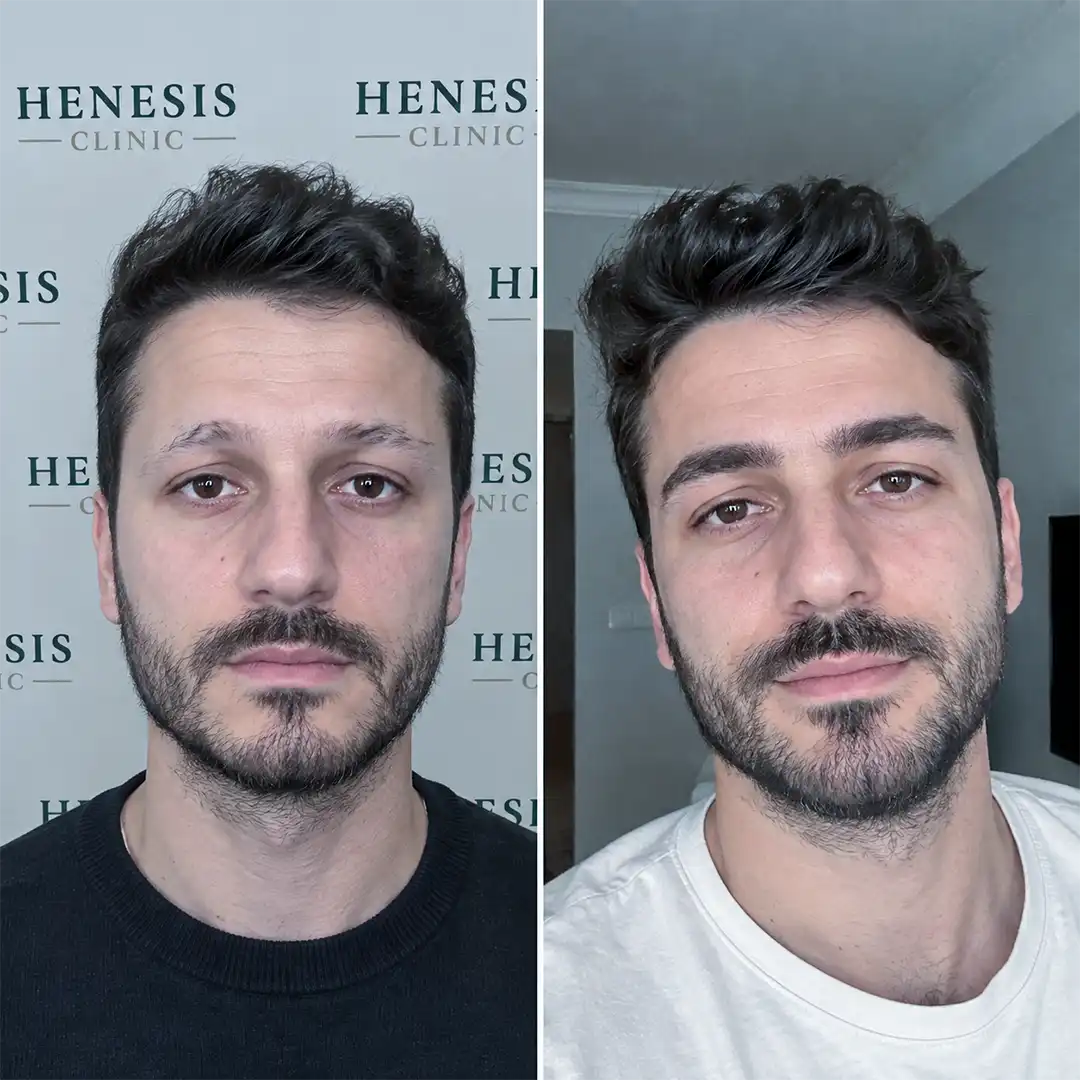 Before
After
Before
After
DHI Eyebrow Transplant
Male DHI Eyebrow Transplant — 520 Grafts
- Technique
- DHI
- Graft Count
- 520 grafts
- Treatment Area
- Medial Head, Body, Arch And Lateral Tail Of Both Eyebrows
- Follow-Up
- 12-Month Follow-Up
Doctor: Dr. Nora Derin, MD
View Clinical Case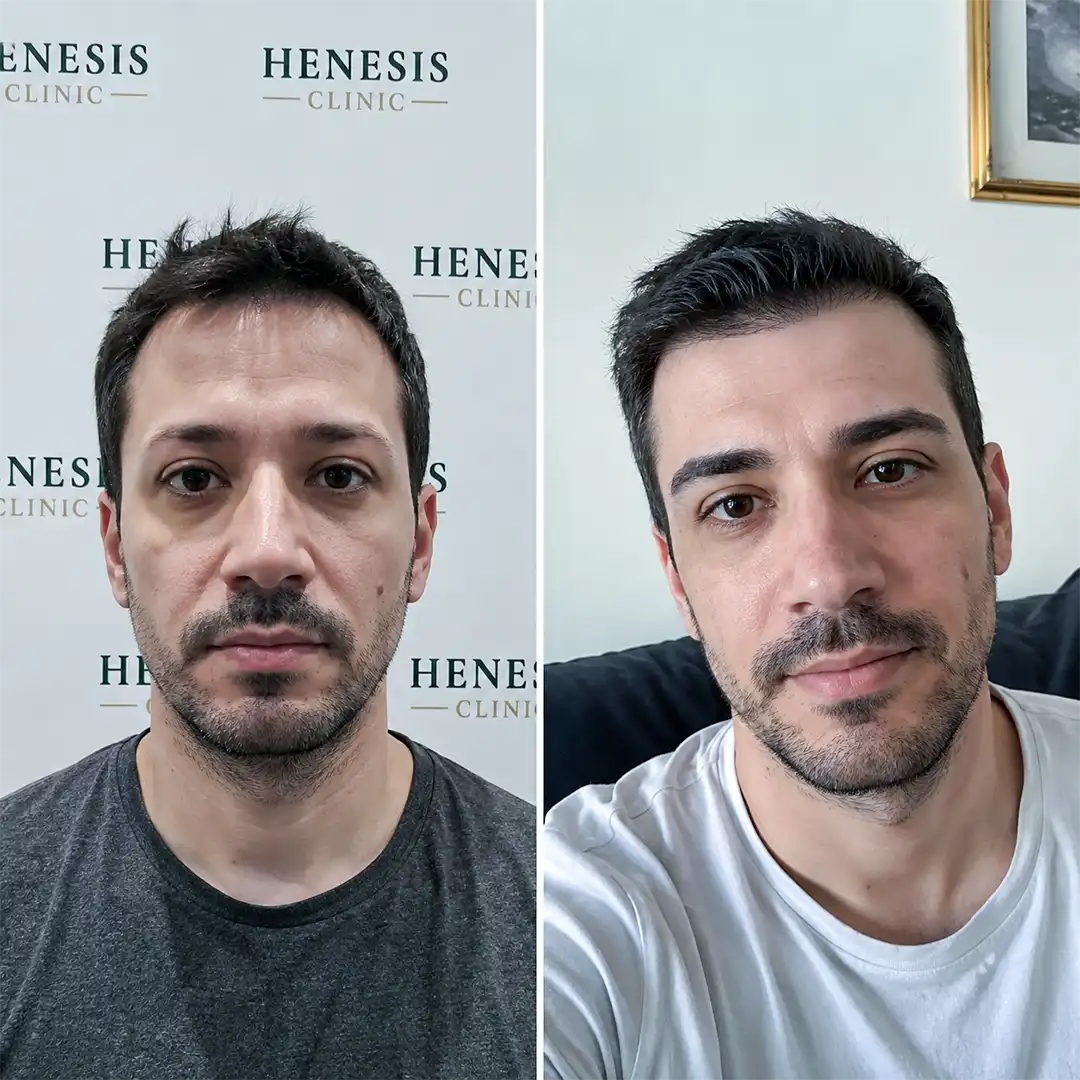 Before
After
Before
After
DHI Eyebrow Transplant
Male DHI Eyebrow Transplant — 480 Grafts
- Technique
- DHI
- Graft Count
- 480 grafts
- Treatment Area
- Medial Head, Body, Arch And Lateral Tail Of Both Eyebrows
- Follow-Up
- 12-Month Follow-Up
Doctor: Dr. Nora Derin, MD
View Clinical Case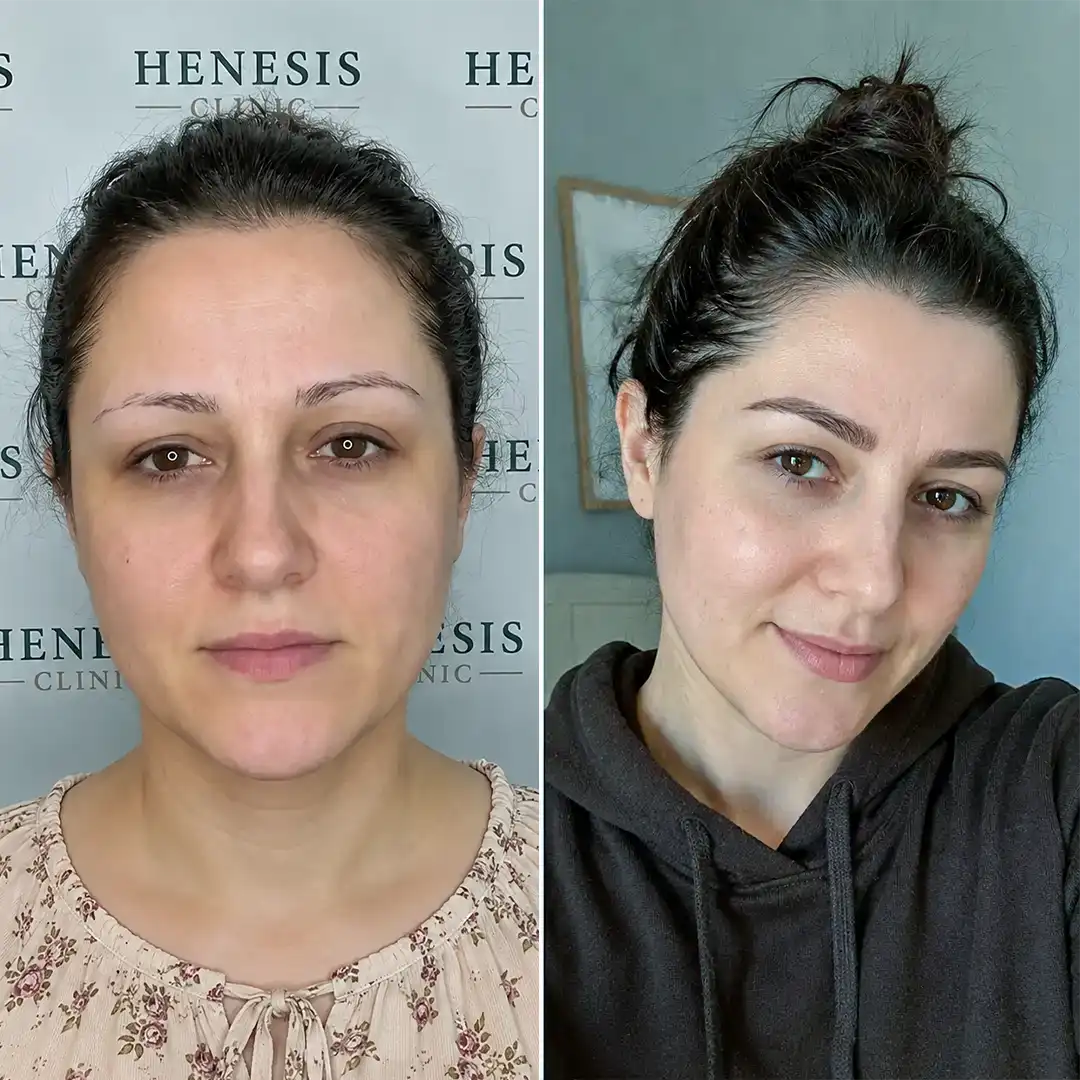 Before
After
Before
After
DHI Eyebrow Transplant
Female DHI Eyebrow Transplant — 400 Grafts
- Technique
- DHI
- Graft Count
- 400 grafts
- Treatment Area
- Medial Head, Body, Arch And Lateral Tail Of Both Eyebrows
- Follow-Up
- 12-Month Follow-Up
Doctor: Dr. Nora Derin, MD
View Clinical CaseStages, not fixed promises
Eyebrow Transplant Recovery and Growth
Healing and growth vary. Follow the eyebrow-specific instructions provided for the individual procedure.
- Procedure Day
Initial postoperative appearance and individual care instructions
- Early Healing
Temporary redness or crusting may occur
- Early Shedding
Transplanted shafts may shed during the early phase
- Early Regrowth
New growth develops gradually
- Maturation
Texture, direction and coverage continue to evolve
Ongoing grooming may be needed. Transplanted scalp-derived eyebrow hairs may retain scalp-hair growth characteristics and may require regular trimming.
These scalp-treatment guides provide general context and do not replace eyebrow-specific postoperative instructions.Informed decision-making
Risks and Limitations of Eyebrow Transplantation
No clinic can guarantee that every transplanted follicle will grow or that a perfectly symmetrical or dense result will be achieved.
Healing Effects
Temporary redness, swelling and crusting can occur during early healing.
Folliculitis / Infection
Follicular inflammation or infection is possible and should be assessed if symptoms develop.
Scarring / Tissue Response
Scar visibility and healing vary between patients and tissue conditions.
Direction / Angle Problems
Incorrect recipient-site direction or emergence angle can create an unnatural brow appearance.
Asymmetry / Density Limitations
Perfect symmetry and uniform density cannot be guaranteed.
Variable Growth / Grooming
Not every follicle can be guaranteed to grow, and scalp-derived hairs may require ongoing trimming.
The published re-treatment guarantee policy explains its defined eligible procedure scope. This page does not state or imply that eyebrow transplantation is covered.
Country context with qualification
Why Do Patients Consider Turkey for Eyebrow Transplantation?
Patients may consider eyebrow transplant in Istanbul because Turkey offers access to clinics focused on hair restoration, international travel infrastructure, price differences compared with some markets and treatment coordination for international patients.
Turkey itself does not establish quality. The same provider-level checks remain necessary when comparing an eyebrow hair transplant in Turkey with care elsewhere. For broader country context, see Hair Transplant in Turkey.
What Should You Check Before Choosing an Eyebrow Transplant Clinic?
- Physician identity
- Who performs the medical assessment
- Who designs the eyebrow
- Who creates recipient sites
- Clinic authorization
- Documented eyebrow cases
- Donor planning
- Aftercare pathway
- Written price and inclusion scope
Named responsibility at every stage
Who Is Responsible for Each Stage at Henesis?
Medical accountability is defined by the task, not by a technique label or package name.
- 01AssessmentDoctor
- 02Donor evaluationDoctor
- 03Treatment planningDoctor
- 04Brow designDoctor
- 05AnaesthesiaAnaesthesiologist
- 06ExtractionTrained technicians under doctor supervision
- 07Recipient-site creationDoctor directly
- 08PlacementTrained technicians under doctor supervision
- 09Final clinical reviewDoctor
Eyebrow Transplant Turkey FAQs
Planning-dependent answers about price, grafts, donor hair, design, recovery, results and technique.
How much does an eyebrow transplant cost in Turkey?
At Henesis Clinic, eyebrow transplantation typically ranges from $870 to $1,670. The final price depends on graft requirements, whether the procedure is standalone or combined with a hair transplant, and whether accommodation or transfer services are required.
How many grafts are needed for an eyebrow transplant?
There is no universal graft number. Planning depends on whether restoration is partial or full, existing brow hair, eyebrow dimensions, donor characteristics, the agreed design and physician assessment.
How long does an eyebrow transplant last?
Long-term growth depends on donor selection, individual biology, recipient conditions and aftercare. Continued growth of every transplanted follicle cannot be promised, and surrounding eyebrow hair may also change over time.
Where does the donor hair come from?
Selected scalp follicles are commonly considered. The doctor evaluates whether available donor-hair characteristics are appropriate for the planned eyebrow recipient area.
Will transplanted eyebrow hairs need trimming?
They may. Scalp-derived hairs can retain scalp-hair growth characteristics, so ongoing trimming and grooming may be required.
Can an eyebrow transplant cover a scar?
Some scar-related gaps may be considered, but scar type, tissue quality, healing characteristics, donor capacity and realistic density need individual assessment. Growth can be less predictable in altered tissue.
Can over-plucked eyebrows be restored?
Long-term over-plucking with stable sparse areas may be considered when the recipient skin, donor supply and design are suitable. Active or unexplained loss still requires assessment.
Is FUE or DHI better for eyebrow transplantation?
Neither is universally better. FUE describes extraction, while DHI commonly describes an implanter-assisted placement workflow. Recipient design, donor characteristics and physician planning determine the approach.
Is an eyebrow transplant painful?
Local anaesthesia is used, but describing any procedure as painless would be misleading. Sensation and discomfort vary, and the clinical team should explain anaesthesia and postoperative expectations.
How long does eyebrow transplant recovery take?
There is no single recovery duration for every patient. Early redness or crusting may occur, aftercare follows individual instructions, and visible healing progresses separately from later hair growth.
When will eyebrow transplant growth become visible?
Transplanted shafts may shed before gradual regrowth. Timing and maturation vary, so the clinic should provide review points rather than promise an exact result month.
Can men have eyebrow transplants?
Yes, selected men may be candidates. Design should follow individual facial proportions, existing brow anatomy, hair direction and goals rather than a universal gender template.
Can both eyebrows be redesigned?
Both brows can be assessed, but redesign scope depends on existing hair, anatomy, donor supply and realistic integration. Balanced brows are not necessarily mechanically identical.
What should I look for in eyebrow transplant before-and-after photos?
Compare camera angle, lighting, brow shape, local hair direction, density distribution, symmetry in facial context and documented follow-up timing. Confirm that the images are genuine eyebrow cases.
Medical references
Sources Supporting Key Clinical Information
Selected non-commercial sources support the eyebrow design, donor-hair, single-follicle, direction, grooming and clinical-assessment information on this page.
- Clinical Outcomes and Technical Tips for Eyebrow Restoration Using Single-Follicular-Unit Hair TransplantationPubMed · Case-series review
- A Technique for Reconstruction of Eyebrows and EyelashesPMC · Reconstructive review
- Reconstructive Hair Transplantation of the Face and ScalpPMC · Clinical review
Medical content reviewed by Dr. Nora Derin, MDEyebrow restoration, DHI and existing-hair planning focus · Published 24 August 2026 · Last reviewed 24 August 2026
