
Yes, selected Black men can be candidates when donor supply, facial skin, follicle characteristics and restoration goals are suitable.
Facial Hair Restoration for Black & Afro-Textured Hair
Afro Beard Transplant
Afro beard transplantation requires planning around both facial-hair direction and the characteristics of curly or coiled follicles. At Henesis Clinic, assessment considers donor-hair texture, possible sub-surface follicle curvature, beard-zone direction, existing facial hair and long-term donor capacity before a treatment plan is recommended.
Direct answers
Afro Beard Transplant — Quick Answers
It can require additional planning because curly or coiled follicles may follow curved paths beneath the skin and facial-hair direction varies by zone.
Scalp donor hair is commonly considered when its texture, calibre and follicle characteristics are suitable.
Donor MatchingHenesis Afro beard transplant plans currently range from $2,233 to $3,815. Pricing follows facial zones, graft requirement, donor work and treatment scope rather than Afro texture alone.
See Afro Beard PricingHair characteristics before technique
What Makes Afro Beard Transplantation Different?
The visible curl above the skin does not necessarily reveal the full path of a follicle beneath it.
Follicle curvature can vary between patients and donor zones.
Scalp donor texture may not perfectly match facial hair.
Recipient direction still changes across beard zones.
No single follicle shape describes every Afro-textured patient.
Donor-to-face compatibility
Scalp Hair and Beard Hair May Not Behave the Same Way
Scalp donor hair can be used for beard restoration, but the visual result depends on texture, calibre, curl behavior and placement direction. A close match is desirable, but a perfect match cannot be assumed.
Donor Characteristics
- Curl pattern
- Hair calibre
- Follicle grouping
- Extraction accessibility
Recipient Beard Characteristics
- Existing curl
- Existing density
- Direction by facial zone
- Styling goals
Donor-stage variables
Curved Follicles Can Change the Extraction Approach
The hair’s surface exit angle may not show its complete sub-surface trajectory. The punch approach may therefore need adaptation to follicle direction, calibre, grouping, skin characteristics and the donor zone.
There is no universal punch size or extraction angle. Planning should aim to minimize follicle transection while preserving a distributed donor pattern.
Explore Curved-Follicle GuidanceVisible hair exitPossible sub-surface pathIllustrative only — trajectories vary
Recipient-stage planning
Beard Direction Still Matters After Extraction
Curly texture can increase visible coverage, but it does not replace careful direction and distribution planning.
Direction planning should follow both the native beard pattern and the intended styling outcome; curl alone should not be used as a substitute for zone-specific placement.
CheeksJawlineMustacheGoateeCurl OrientationNative-Hair Transition
Compact treatment scope
Which Facial Hair Areas Can Be Restored?
This page may cover cheeks, jawline, mustache, goatee, sideburns and selected stable scar-related gaps. Broader facial-zone design belongs on the beard guide.
CheeksJawlineMustacheGoateeSideburnsSelected Scar-Related Gaps
See Beard Design & Facial Zones Suitability before workflow
Who May Be Suitable for Afro Beard Transplantation?
May Be Considered When
- Beard growth is naturally sparse
- Patchy areas are stable
- Donor supply is adequate
- Donor texture and follicle characteristics are suitable for the intended facial zones
- Facial skin is suitable
- Restoration goals are realistic
Needs Further Assessment When
- Skin disease is active
- Facial-hair loss is unexplained
- Scarring is significant or uncertain
- Donor supply is limited
- Density expectations are unrealistic
- Previous abnormal wound healing needs review
Black men’s facial-hair context
Beard Transplantation for Black Men
Facial-hair patterns, curl behavior and calibre vary widely among Black men. There is no single “Afro beard” template that should be applied across patients.
Design should follow the existing beard, individual facial proportions, donor characteristics and the patient’s styling goals rather than a racialized preset.
Different procedural stages
FUE or DHI for Afro Beard Transplantation?
FUE primarily describes donor extraction, while DHI describes an implanter-assisted recipient-placement workflow. Afro beard planning may use either workflow depending on extraction characteristics and recipient needs.
Documented patient cases
Afro Beard Transplant Before & After Results
Explore documented Afro beard transplant cases with verified treatment and follow-up context. Individual results vary.
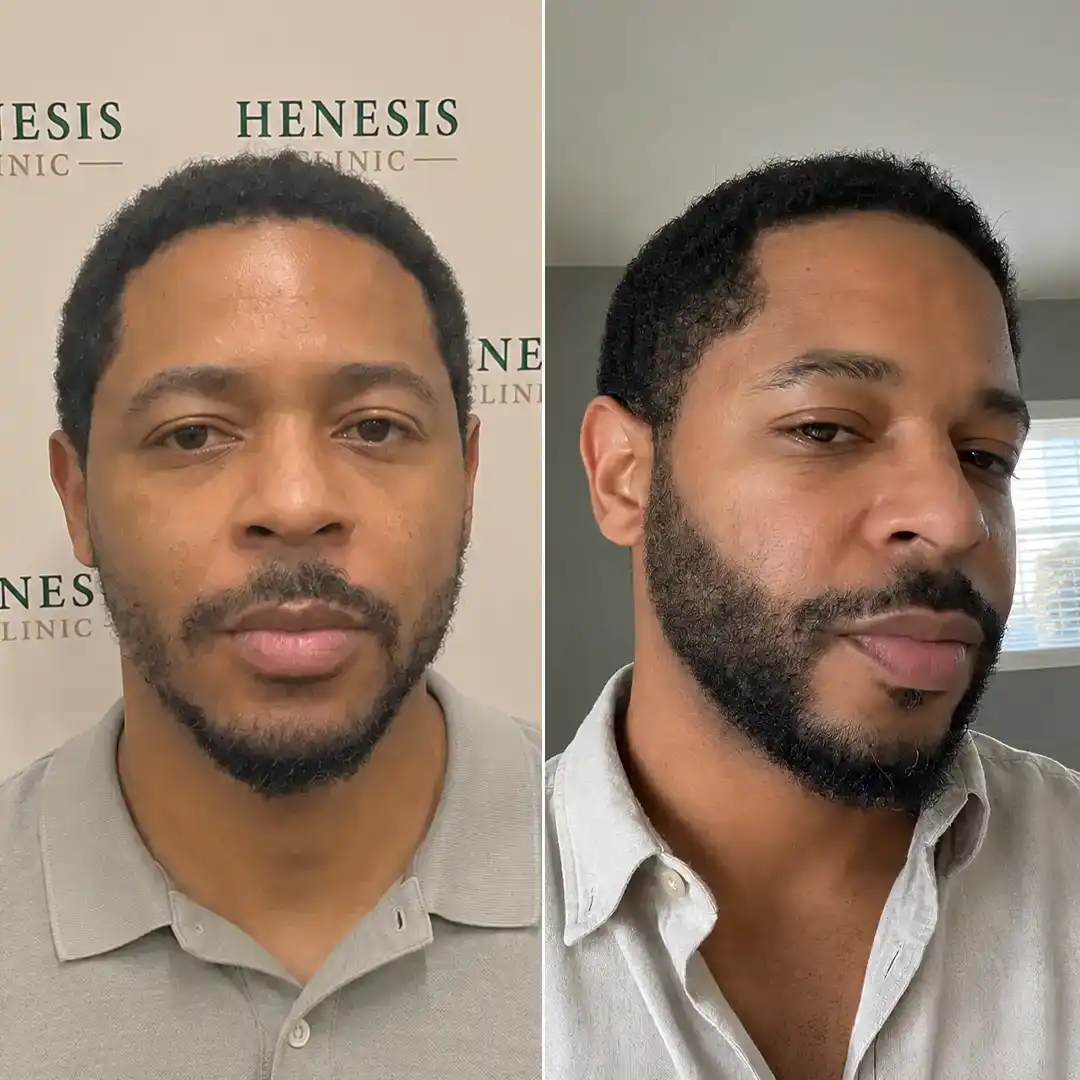 Before
After
Before
After
DHI Beard Transplant
Afro Beard Transplant — 2,100 Grafts
- Technique
- DHI
- Graft Count
- 2,100 grafts
- Treatment Area
- Cheeks, Jawline, Chin And Sideburn Connection
- Follow-Up
- 12-Month Follow-Up
Doctor: Dr. Nora Derin, MD
View Clinical Case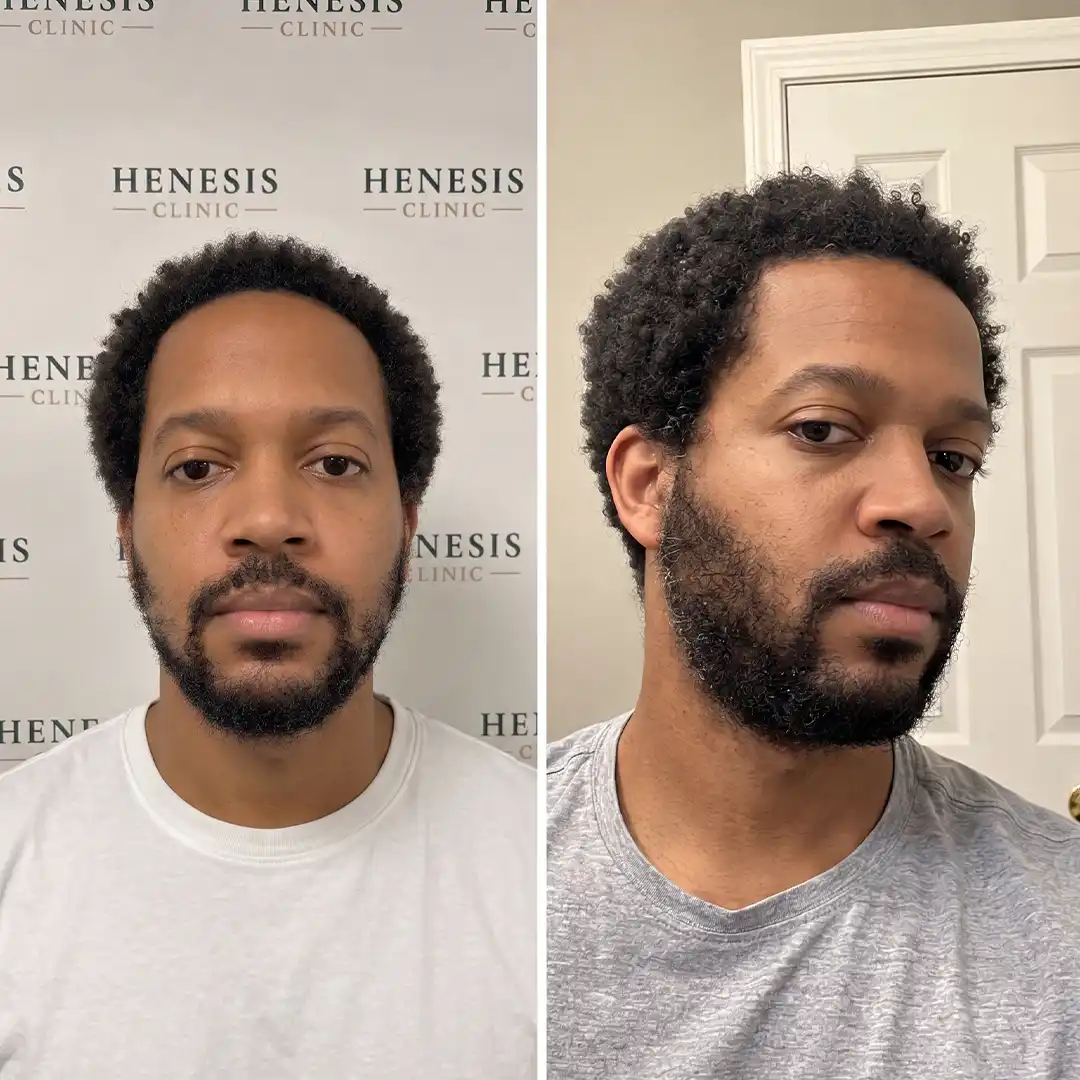 Before
After
Before
After
FUE Beard Transplant
Afro Beard Transplant — 2,250 Grafts
- Technique
- FUE
- Graft Count
- 2,250 grafts
- Treatment Area
- Cheeks, Jawline, Chin And Sideburn Connection
- Follow-Up
- 12-Month Follow-Up
Doctor: Dr. Nora Derin, MD
View Clinical Case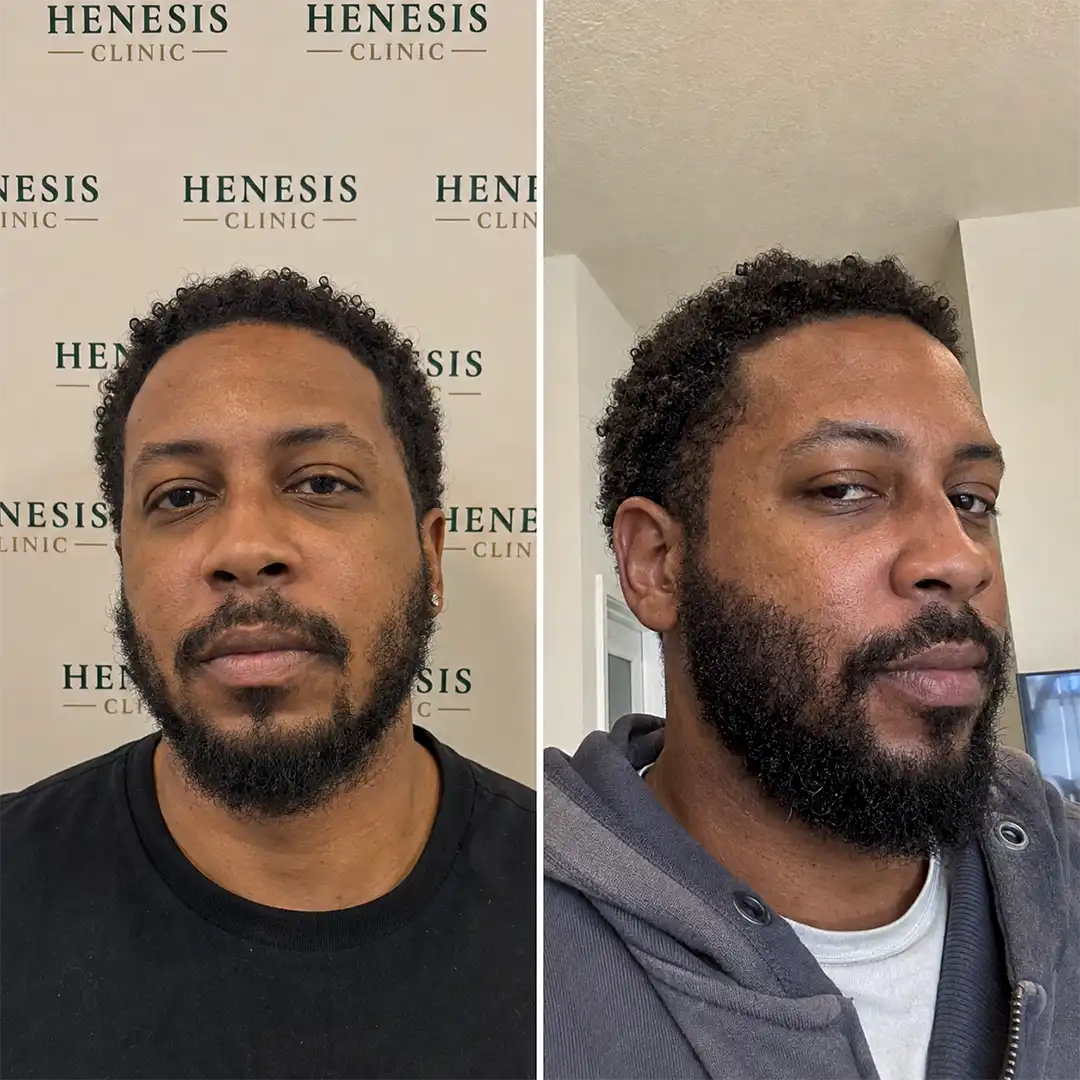 Before
After
Before
After
FUE Beard Transplant
Afro Beard Transplant — 2,400 Grafts
- Technique
- FUE
- Graft Count
- 2,400 grafts
- Treatment Area
- Cheeks, Jawline, Chin And Submandibular
- Follow-Up
- 12-Month Follow-Up
Doctor: Dr. Timur Aksu, MD
View Clinical CaseSame beard pricing range
Afro Beard Transplant Cost
Henesis Afro beard transplant plans currently range from $2,233 to $3,815. Henesis does not apply a separate surcharge based only on Afro-textured hair. Final pricing follows the facial zones treated, graft requirement, donor work, extraction considerations, recipient workflow and package scope confirmed after assessment.
- Henesis Afro Beard Plans
- $2,233–$3,815
- Afro-Texture Surcharge
- None
- Pricing Basis
- Individual treatment scope
Written policy scope
Written Re-Treatment Guarantee
Eligible scalp, beard and Afro-textured hair-transplant cases may qualify for corrective treatment without a new procedure fee.
Compact recovery overview
Afro Beard Transplant Recovery
Recovery follows the individual donor and facial recipient areas rather than hair texture alone. Case-specific instructions should take priority over a fixed online timeline.
- First days
Facial redness, swelling, crusting and donor-area sensitivity can occur.
- Following weeks
Visible healing continues and transplanted hairs may temporarily shed.
- Following months
Growth develops progressively; timing and appearance vary between patients.
Individual history—not skin tone alone
Does Afro Beard Transplantation Increase Keloid Risk?
Keloid or problematic scarring risk should not be assumed from skin tone alone.
A personal or family history of abnormal scarring, previous wound healing and facial and scalp examination are more useful clinical considerations. Beard transplantation is not scarless, and uncertain healing history requires individual assessment.
Afro beard-specific limitations
Afro Beard Transplant Risks and Limitations
Follicle Transection
Curved or changing follicle paths can increase extraction complexity.
Donor Overharvesting
Facial restoration still depends on a finite donor resource.
Donor-to-Beard Mismatch
Texture or calibre differences may remain visible after growth.
Unnatural Direction
Placement that does not follow facial zones can disrupt natural flow.
Density Irregularity
Coverage can appear uneven when distribution or growth varies.
Healing Variation
Scarring, irritation and visible healing differ between patients.
Country context
Why Do Patients Consider Turkey?
Patients may choose Turkey for price and provider availability, but Afro beard suitability still depends on relevant experience, donor planning, documented cases and realistic claims. See the generic Beard Guide for broader Turkey context.
Provider selection
How to Compare Clinics for Afro Beard Transplantation
Actual Afro Beard Cases
Can the clinic show documented facial-hair cases with similar curl characteristics?
Curved-Follicle Experience
How is donor extraction adapted when follicle trajectories are uncertain?
Extraction Responsibility
Who plans and performs or supervises harvesting?
Donor-to-Beard Matching
How are texture, calibre and facial-zone compatibility assessed?
Realistic Design & Graft Planning
Are design and graft recommendations individualized rather than sold as a fixed package?
Medical references
Sources Supporting Key Clinical Information
Selected non-commercial sources support the facial-hair reconstruction, curved-follicle extraction, scarring and general hair-transplant information on this page.
- Beard and Moustache ReconstructionPMC · Clinical review
- Follicular Unit Extraction Hair Transplant: Curves AheadPMC · Technique and complication review
- Hair TransplantationNCBI Bookshelf · StatPearls
Medical content reviewed by Dr. Timur Aksu, MDLead Hair Restoration Physician · Last reviewed 29 August 2026
Afro Beard Transplant FAQs
Concise answers about candidacy, donor matching, extraction, scars, cost and long-term results.
Can Black men get beard transplants?
Yes. Selected Black men can be candidates when donor supply, facial skin, follicle characteristics and restoration goals are suitable.
Is Afro beard transplantation different?
It may require additional planning because visible curl does not always reveal the complete follicle path beneath the skin, while donor-to-beard matching and direction vary by case.
Where does donor hair come from?
Scalp donor hair is commonly considered when its availability, texture, calibre and follicle characteristics are suitable for the intended beard zones.
Will scalp hair match Afro beard hair?
A close match may be possible, but a perfect match cannot be assumed. Curl behavior, calibre, texture and donor-site growth characteristics influence how transplanted hair blends.
Is FUE suitable for Afro beard transplantation?
FUE-based extraction may be used in suitable cases, but the extraction approach should account for possible sub-surface follicle curvature and individual donor characteristics.
Can mustache and goatee areas be restored?
Yes, in selected cases. Existing facial hair, direction, donor matching, skin condition and the intended transition between zones should be assessed.
Does Afro beard transplantation leave scars?
It is not scarless. Donor harvesting and facial placement create small sites that heal individually, with visibility affected by technique, skin characteristics and individual healing.
Is keloid scarring more likely?
Risk should not be assumed from skin tone alone. Personal or family history of abnormal scarring, previous wound healing and clinical examination provide more useful context.
How much does Afro beard transplantation cost?
Henesis Afro beard transplant plans currently range from $2,233 to $3,815. There is no separate surcharge based only on Afro-textured hair; the final quote follows treatment zones, donor work, graft requirement and package scope.
Are Afro beard transplant results permanent?
Transplanted follicles from a suitable donor area generally retain important donor-site growth characteristics, although appearance, styling needs and surrounding facial hair can change. This does not guarantee a specific density, appearance or unchanged lifelong result.
